
The Way of Blessing
HaggaiP. G. Mathew | Sunday, December 29, 1991
Copyright © 1991, P. G. Mathew
“Give careful thought to your ways.” Many people consider religion to be mindless inspiration, but true religion requires thought. Jesus said, “Seek ye first the kingdom of God and his righteousness.” The way of blessing is the way of God, and it is our responsibility to find the way of God and walk in it. We need to examine how we live and then consider God’s way, because his way is the way of true peace, prosperity, power, joy and hope. In the book of Haggai we discover the way of blessing is not our way but God’s.
Haggai is the second shortest book in the Old Testament. The name comes from the Hebrew word hag, which means feast, so Haggai could mean festal. God spoke through Haggai after years of dealing with his people Israel.
A Brief History
Centuries before the time of Haggai, God spoke to Israel and said they should be careful to observe the covenant he made with them on Mount Sinai. In the last chapters of Leviticus and Deuteronomy, there is a threat of severe punishment for neglecting this covenant. But thinking they could break God’s covenant with impunity, the people of Israel did reject the covenant and the covenant Lord. Then God, who is long-suffering and patient, slow to anger and plenteous in mercy, sent prophets, one after another, to remind his people of their obligation to obey him.
But God’s people rejected the exhortations of the prophets. In 606 B.C. the armies of Babylon came and took a number of people, including Daniel, Hananiah, Mishael and Azariah, away into exile. There was another deportation in 597 B.C. and finally, in 586 B.C., God’s threat had received its fulfillment and the beautiful temple that Solomon built was burned and destroyed. God’s people were taken into a captivity which God through Jeremiah said would last around seventy years.
God also said that he would raise up a king named Cyrus. Long before Cyrus was ever born God spoke in Isaiah 44:28 and 45:13 that he would raise up a pagan king who would do his bidding. Cyrus was a minor king in Anshan in Elam, but he conquered Media in 549 B.C. and Babylon in 539 B.C. In 538 B.C. Cyrus issued a decree allowing the Jews to return to Palestine to build the temple of the Lord. In the first four chapters of Ezra we read that 50,000 people came back under the leadership of the governor Zerubbabel and the high priest Joshua.
The people who came in 538 quickly built an altar, and from 538-536 they worked to lay the foundation for the temple. Then the opposition began. This happens to us also. When we begin to do God’s work, Satan opposes us. When we want to serve God, there will be opposition, whether it comes from our neighbor, our employer, or our family.
In Ezra 4 we read that the local people, who were Samaritans, raised such opposition that Zerubbabel, Joshua and the people became discouraged and stopped building. They stopped seeking God’s will and doing God’s work. They probably thought, “Maybe God doesn’t want us to do this. If God really wanted us to do it, he would have taken care of this opposition.” What foolish thinking! What they ought to have done was to trust in God, who sent them for the very purpose of building the temple and worshiping him. They can be contrasted to Nehemiah who came later to build the wall. He faced continuing opposition, but he trusted in his God and refused to stop his spiritual activity.
These people became discouraged and thought it was not time to build. It was time to build, but they gave themselves over to fear and unbelief. From 536 B.C. on they began to pursue their own interests, concentrating their energies on making their own lives secure—that is, on making money and building houses. And these were not just houses—they were luxurious, paneled houses. During this time, the opposition stopped. Satan will not oppose you if you are not doing God’s work. Satan wants us to build houses, make money and do whatever we want, but he will oppose us the moment we do God’s work.
So these people built their houses, but they had failed in their mission. Not trusting in God, they went away and took care of their own self-centered interests. Then followed sixteen years of pure spiritual neglect. The house of God was in ruins, which was exactly what Satan wanted. He wants our spiritual life to be a waste and a ruin. But God is faithful to his covenant promise, and in 520 B.C. four prophecies came to Haggai, whom the Lord Almighty raised up and sent to Zerubbabel the governor, Joshua the high priest, and the people.
Rebuke
God’s first word was rebuke. Haggai 1:2: “This is what the Lord Almighty says, ‘These people say…'” Notice, God is not saying “my people.” There is a certain rebuke even in the address. What were they saying? They were legitimizing their pursuit of personal peace and affluence with this statement: “The time has not yet come for the Lord’s house to be built.”
They probably thought if it was time, there wouldn’t be any opposition. However, we will never pursue spiritual interests if we wait for the absence of opposition. Satan hates our spiritual pursuits and will oppose them vigorously. The Bible says, “Now is the accepted time, now is the day of salvation…. ” (2 Cor. 6:2, KJV), “Today, if you hear God’s voice, do not harden your hearts…” (Heb. 3:7, 8, 15) Today is God’s time for us to change, to build God’s house, to pursue spiritual interests.
In verse 4 God asked, “‘Is it time for you to be living in paneled houses, while this house remains a ruin?'” This is a question to us. Are we are making money, building houses and feeling powerful when our spiritual lives are in ruins and waste? Many people are like the fools of Luke 12 and Luke 16, who work very hard so they can tell their souls to eat, drink and be happy for many days. But these fools did not seek God. They are rich in terms of the things of this world, but not rich toward God. What happens when their souls are demanded of them?
What about Christians who are interested in personal peace and affluence, while spiritual things are like lead weights tied to their feet? They are not really praying or worshiping God daily. To them the prophet says: You have wrong priorities. The right priority is to seek first the kingdom of God, not build your own house. God is not opposed to houses, but he is opposed to anything we do at the expense of seeking God first.
So, God rebuked his people: “Give careful thought to your ways.” Christianity is not essentially an emotional religion whose purpose is to make us feel good. Our God is a God who thinks. He is wisdom, knowledge and understanding. God created us in his image, with minds to think through our problems and change what is not according to God’s priorities. God wanted his people to examine their ways, which were dangerous, self-centered and wrong. So five times, in Haggai 1:5, 7; 2:15 and twice in verse 18, God told his people to give thought. Christianity is an intellectual religion, and we need to study the Bible and think. These people had abandoned God for sixteen years, looking after their own interests because of problems, failing to realize whenever we do God’s work there will be problems. After his rebuke they thought carefully and concluded that God had sent them to build his house and worship him and that when they did that, he would bless them. They realized they needed to trust God, who had commissioned them, to deliver them from their enemies.
Then in Haggai 1:7-8 God said, “Give careful thought to your ways. Go up into the mountains and bring down timber.” This was a command, not a suggestion. There had been cedars there, but the people had taken them to build their own houses. When people are self-centered, they will take what is God’s, use it for themselves, put a few dollars in the offering and feel good. But what is the chief purpose of man? It is to glorify God and enjoy him forever. To glorify God means to obey him as a son obeys his father. If a son says, “I honor my father, but I will not do what he says,” he is not honoring him. Our purpose in life is to first discover the will of God and do it, thereby honoring him, and secondly, to enjoy God, which is a by-product of putting him first in our lives.
God rebuked their worship. In Haggai 2:11-14 God told the people that while holiness is not contagious, sin is. Because their hearts were sinful, all they had done for sixteen years in terms of worship was defiled and God never accepted it. We think that any worship will be accepted by God, but worship must be offered to God with a heart that is pure and clean. What a rebuke!
Then God explained that he him-self had cursed their efforts. When we pursue our own interests at the expense of God’s, he is going to deal with us. So Haggai 1:6 says, “You have planted much, but have harvested little. You eat, but never have enough. You drink, but never have your fill. You put on clothes, but are not warm. You earn wages, only to put them in a purse with holes in it.” In Haggai 1:9, it says, “You expected much, but see, it turned out to be little.” The people had thought that each year’s harvest would be abundant, but in reality they got little, and here God claimed the responsibility. God will touch our economics, our health and everything else until we come to a place where we humble ourselves before God and seek first his kingdom and his righteousness.
Look at chapter 1, verse 9: “What you brought home, I blew away.” And verse 11: “I called for a drought and drought came.” God is in control of all things. In chapter 2, verse 17, he said, “I struck all the work of your hands with blight…” If we neglect the priority of God’s kingdom, he curses all our efforts. Look at the end of verse 9 of chapter 1: “…while each of you is busy with his own house.” Jesus said that pagans run after the things of the world. But what about us? Are we running after our own interests, pouring all our energies on our children, our work, our education, our social life and our investments while God’s house lies in ruins and waste?
Revival
So God rebuked his people, and then there was revival. No matter how much God may rebuke us, unless he revives us we will not be able to respond. God must move in the center of our being, motivating us and making us weary of the things of this world in order for us to truly seek him who is the Desire of all nations.
Notice what Haggai 1:14 says: “So the Lord stirred up the spirit of Zerubbabel … the spirit of Joshua… and the spirit of the whole remnant of the people.” The Lord must stir us up in spiritual things and show us the futility of pursuing the things of this world. He must make us detest such pursuits, and make us love him and his kingdom, which is righteousness, peace and joy in the Holy Spirit.
Does this mean he stirs our bodies? No. In order to do God’s will, we need to be stirred in our minds, spirits, emotions and wills. Philippians 2:13 says, “Work out your salvation with fear and trembling, for it is God who works in you, both to will and to act in accordance with his good will.” That is Reformed thinking, that we will work out that which he has worked inside us—to think his thoughts, will his will and do his work. We need to pray, “O God, help me to examine my ways. And God, I cannot even do that until you stir my spirit into things spiritual and things eternal.”
Look at the Lord’s promise in Haggai 1:13. “‘I am with you,’ declares the Lord.” He was telling them not to worry about the Samaritans or any opposition. We need to understand that his name is Immanuel, which means God with us, fighting our battles, energizing and empowering us, and stirring our spirits up. PGM He alone is our refuge and our strength. This is not just an idea of God, but the living and true God who created and sustains the whole universe and without whose command no sparrow can fall to the ground. This God is with us. This fact was stated two other times in Haggai 2:4-5. So God was telling his people to trust and depend on him.
That is revival. Look at the Lord’s encouragement in Haggai 2:4: “But now, be strong, O Zerubbabel …” He doesn’t mean to be strong in one’s own strength. The one who is strong is the one who says, “I am weak.” (2 Cor. 12:10). God was saying that because they acknowledged that they were weak, his strength would come into them, enabling them to do his will. Then he said again, “Be strong, O Joshua,” and, “Be strong, all you people.” This strength was for doing God’s work. Haggai 2:5 says,”Do not fear.” Why? With God there was nothing to fear.
Then God spoke about future things. As the people looked on the ruins, they remembered the glory of the former temple, but God told them the glory of the new temple would be greater than that of the old. The glory of the former temple was the Shekinah glory, the glory of God’s presence, as recorded in Isaiah 6, but through Haggai God said that the glory of the new temple would be greater, and it was, in that the Lord Jesus Christ himself came to this new building as we read in Luke 2:29-32.
Haggai was also given tremendous vision into the second coming of Christ. Chapter 2, verse 7 says, “I will shake all nations…” This God who is with them, who says, “Be strong” and ” Be not afraid,” is the God who can shake all nations. Jesus Christ alone, the Son of God, will shake all nations. And in Haggai 2:22 he says, “I will overturn royal thrones and shatter the power of the foreign kingdoms.” God was telling them not to be afraid, because he is the God who will shatter all kingdoms of the world, and his kingdom alone is unshakable. Daniel was given a vision of this in Daniel 2, where he saw a stone not cut by human hands destroying all the powers of this world. And Revelation 11:15 says, “The kingdom of the world has become the kingdom of our Lord and of his Christ.”
So God revived his people, saying, Be strong. Don’t be afraid. I am with you. My Spirit is with you. Bring timber, build my house, sacrifice, worship me, and I will bless you.
Response
The response of the people was almost immediate. In Haggai 1:12 it says, “Then Zerubbabel son of Shealtiel, Joshua son of Jehozadak, the high priest, and the whole remnant of the people obeyed the voice of the Lord their God.” They didn’t say, “Well, this is just Haggai speaking his opinion.” They believed the word of the Lord. These people now obeyed and feared the Lord. We read in Jeremiah 32:40 about the godly, beneficent fear of God entering into our being to make us obey God. So in Haggai 1:14-15 we read that the people “began to work on the house of the Lord Almighty, their God, on the twenty-fourth day of the sixth month.” Twenty-three days after the first prophecy they started building.
Look at Haggai 2:19: “Is there yet any seed left in the barn? Until now, the vine and the fig tree, the pomegranate and the olive tree have not borne fruit.” But then God said, “From this day on I will bless you.” We have a choice. We can pursue our own interests and have no fruit; we can fail to seek God and produce little, only to have God destroy it, or we can believe God and do what God says. And God told his people that from the day of their obedience and commitment to do his will … from that day on he would bless them. God put his signature to his promise.
The Way of Blessing
What is the way of blessing? It is seeking God’s kingdom and doing what he says. This is an amazing statement: “From this day on I will bless you.” God challenged them to write down the date. The moment a person commits his or her life to Jesus Christ, believing in God and obeying him, God Almighty says, “From this day on I will bless you!” Mark that day!
Did God do what he said? Look in Ezra 6:14-15: “So the elders of the Jews continued to build and prosper under the preaching of Haggai the prophet and Zechariah, a descendant of Iddo. They finished building the temple according to the command of the God of Israel and the decrees of Cyrus, Darius and Artaxerxes, kings of Persia. The temple was completed on the third day of the month of Adar, in the sixth year of the reign of King Darius.”
After five years of building, the people completed the temple in 516 B.C., lacking nothing during that time. Note Haggai 2:8 where God said, “The silver is mine and the gold is mine.” The people didn’t worry about expenditures, God provided everything for the accomplishment of his work, and finally they celebrated the Passover with great joy.
What does Haggai teach us? As in those days, God is speaking to us now, telling us to serve him today. We may be thinking, “Oh, I’ll serve God, but the time is not yet.” If we think that way, that time will never come. We have no guarantee that we will live another day. We need to think carefully and examine our ways to see whether we are promoting our own private interests or God’s. The rich fool became very religious in hell, desiring to hear the word and tell his brothers about God. But there was no other opportunity. He had wasted his entire life in the pursuit of plea-sure and worldly power.
Let us consider our ways and build God’s house first! Let us cultivate spiritual life and live God-centered lives. Let us begin to put the Lord first today. This alone is the way of blessing.
Thank you for reading. If you found this content useful or encouraging, let us know by sending an email to gvcc@gracevalley.org.
Join our mailing list for more Biblical teaching from Reverend P.G. Mathew.
About the Speaker
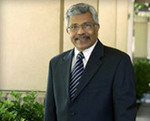
Pastor Mathew holds three graduate degrees in theology from Central and Westminster theological seminaries (USA) and is the founder and former Senior Minister of Grace Valley Christian Center. Originally a scientist from India, he is also a former professor