
Prepare to Meet Your Lord
Matthew 25:1-13P. G. Mathew | Sunday, January 14, 1996
Copyright © 1996, P. G. Mathew
Evangelical Christianity today is a mixed bag. Some believe a very popular teaching which says that if you mentally assent to the facts of Christianity once in your life, you will be saved forever, no matter how you live. Others say that if you believe in the gospel, you will enjoy better health, amass great wealth, and have great power and position in this world. Still others teach that if you believe in the gospel, you will be filled with the Holy Spirit in such a way that you will bark like a dog or laugh like a drunkard, thus demonstrating that you really love God. Then, of course, there is biblical Christianity, which we endeavor to proclaim, that declares that God saves sinners. Biblical Christianity says that when God saves sinners, those who are so saved will love God with all their heart, mind, soul and strength, and will do good works, demonstrating they are truly Christians. The parable of the ten virgins deals with such a mixed bag of people. There were ten virgins who appeared to be alike, waiting together for the bridegroom, but only five were admitted to the wedding banquet. From this parable we want to learn how to prepare ourselves to meet our God.
Context: The Second Coming of Christ
This parable appears only in the gospel of Matthew, and is set in the context of Matthew 24 and Matthew 25:14-46, passages which deal with the second coming of Christ. These scriptures speak of our need to be ready to meet Christ when he comes. No one knows the day or hour of his second coming, even though throughout history false prophets have made predictions, thereby making fools of themselves in the eyes of the world. Jesus said, “No one knows about that day or hour, not even the angels in heaven, nor the Son, but only the Father” (Matt. 24:36). But he certainly is coming again. Even as Jesus prophesied his death and resurrection, which came to pass, he also prophesied his return to this planet from heaven to judge his enemies and save his people. He will come suddenly, when no one expects it, like a thief in the night. He will come personally and visibly. All the nations will see him, and some will mourn, while those who love the Lord will rejoice greatly. He will come with angels and trumpet sounds, in glory and in power.
Those who are faithful and wise will be received by him when he comes, as we read in Matthew 24:45-47, and those who are wicked will be judged by him (Matt. 24:48-51). Who are the faithful and wise servants? Those who know the will of God and faithfully do it. They are ready to meet him. Who are the wicked servants? Those who know the will of God but who refuse to do it, preferring to live a life of wickedness in the interim before he comes again. So preparation for the second coming of Christ does not consist in a passive life of watching and waiting while sequestered away from the world. The wise, those who prepare to meet God, are those who are busy doing the will of God in his absence. They are the ones who will be ready, and they will enter into the banqueting hall.
The Foolish Virgins
First, then, let us look at the ten virgins this parable speaks about. As I interpret this parable, the ten virgins represent the visible church. Of course, some would say that this parable has absolutely nothing to do with the church. Many theologians say that gospels themselves have nothing to do with the church, because in their understanding the gospels speak to the Jewish people of that time, and the church was an afterthought of God. But we believe that all Scripture, the Old and New Testaments, is “useful for teaching, rebuking, correcting and training in righteousness.” Therefore, in this parable we see that the ten virgins refer to the professing church, which consists of both true believers and false confessors. The term “virgin” symbolizes purity, but only five of these who professed that Jesus is Lord practiced the pure implication of that confession by serving the Lord with gladness. The other five were false professors.
Who were these foolish virgins? They are called foolish for one reason–they “took their lamps but did not take any oil with them.” Why did that matter? In order to meet the bridegroom at night, there was one requirement–a bright, blazing torch. When the cry went out, “Behold, the bridegroom cometh! Go out to meet him!” these virgins were to light their torches, meet the bridegroom, and proceed with him to the place of feasting and celebration.
This was the custom of the time. Although we do not have detailed histories of marriage ceremonies during Jesus’ time, we have a general idea of the traditional practices. First, a man and woman would be betrothed, and this betrothal was taken seriously. It could not be dissolved except by a legal divorce. After a year or so of betrothal the couple would be married. The bridegroom and his party would go to bride’s home, where certain ceremonies and feasting would take place. Then there would be a procession, generally at night, to the home of the bridegroom’s parents. Friends holding lighted torches would join this procession. The customary torches were long poles with oil-drenched rags at the top, not little lamps that would go out in the wind. These torches required large amounts of olive oil which had to be carried along in flasks. The torches could burn for about fifteen minutes before the oil had to be replenished. Friends of the bridegroom honored him by escorting his procession with these lighted torches. If anyone joined the procession without a torch, he was considered an enemy of the bridegroom, as one who dishonored him.
These torches, then, gave a bright light which greatly added to the joyful celebration. Those holding torches would be admitted to the feast, but those without lights would be excluded. This requirement was known to all.
The foolish virgins took their torches but they did not take any oil. They were like the one guest in the parable of the wedding feast (Matt. 22) who lacked the one necessary thing, the wedding garment. These lazy, thoughtless, careless, foolish virgins are like those people who come to church for inspiration only. They are those who put their minds into neutral, hearing the message but not being interested in understanding the implications of the gospel.
It was not easy to distinguish the foolish virgins from the wise ones because there were many similarities between them. They were all virgins, and they all had torches. They all slept and they all woke up. They all trimmed their torches when they heard the cry in the middle of the night. They all intended to be in the procession and to feast with the bridegroom. In almost all respects these foolish virgins looked like the wise ones. In the same way, in the visible church there are professing Christians who look like true believers. Such professors confess Christ, carry Bibles, join the church, worship regularly, give money to the church, and perform certain similar religious duties. Yet the truth is, they are not true believers. They lack the essential ingredient.
The Wise Virgins
Who were the wise virgins? They differed from the foolish virgins in one respect. They alone exercised their minds. They were thoughtful. They learned of the essential requirement of torchlight for the procession, and they knew that without blazing torches they would be excluded from the procession and from feasting with the bridegroom. So they put this knowledge into practice. They took their torches, as well as ample supplies of olive oil in jars, with them. The wise virgins are true believers who are led not by the enthusiasm of emotions but rather by an understanding of the gospel. They are those who know the will of God and do it. They understood that it was God who gave them minds, and the first thing they needed to do with their minds was to think about God.
The wise virgins possessed the one thing that was needful, an understanding of the gospel. PGM When you reflect upon the parable of the soils in Matthew 13, you also notice that only one group of people, those characterized as the fourth soil, really understood the gospel. So we read in Matthew 13:23, “But the one who received the seed that fell on good soil is the man who hears the word and understands it. He alone produces a crop yielding a hundred, sixty or thirty times what was sown.” This means that those represented by the first three soils did not understand the gospel and therefore did not produce any fruit. Their faith was false, dead, and unfruitful.
Faith comes by hearing and understanding the gospel, and this gospel requires us to take up our cross and follow Christ. This requires us to not only call Jesus “Lord” with our lips, but to worship him with our hearts and serve him daily with gladness. Faith in Christ means living trust in Christ. Foolish virgins are false believers who receive Jesus Christ in order that their lives in this world will be made more exciting and successful. They do not really think about the life to come. They want health, wealth, and power in this world–a trouble free life. But wise virgins are those in whom the Holy Spirit applies the redemption of Christ. There is an inner reality to their confession, not just external conformity.
The Defining Difference
The crucial element the foolish virgins lacked was oil. What was this oil? It represents the work of the Holy Spirit in the life of a believer. In Romans 8:9 Paul says, “If anyone does not have the Spirit of Christ, he does not belong to Christ.” On the basis of this work of the Holy Spirit, a believer spontaneously, personally, and truly loves and obeys God with great delight.
What does the work of the Holy Spirit include? First, it is the effectual calling that brings about regeneration. By the power of the Spirit of God wicked sinners are brought to life. Through regeneration those who were dead and unresponsive toward God are made responsive to God and brought to such conviction that they repent of their sins. This is their inner reality. They exercise true faith in Jesus Christ so that they entrust themselves to him. Real faith is not simply believing certain facts of Christianity, but it is an entrustment of oneself to Christ now and forever. Such a person is justified by faith, meaning God declares that person just. God puts into his or her account the righteousness of Jesus Christ, and so he or she is just now and forever, clothed in the irreproachable righteousness of Christ. Such a person is adopted into the family of God and cries, “Abba, Father.” The same Holy Spirit then causes that one to be sanctified, which means to increasingly hate sin and increasingly love the will of God. And finally, at death such a person will be glorified, that is, made perfect and without fault, and will be presented with exceeding joy to God the Father.
The wise virgins possessed this inner reality. They were being made conformable to the image of Jesus Christ. Look at 2 Peter 1:5-11, which speaks about wise as well as foolish virgins. “For this very reason, make every effort to add to your faith goodness; and to goodness, knowledge; and to knowledge, self-control; and to self-control, perseverance; and to perseverance, godliness; and to godliness, brotherly kindness; and to brotherly kindness, love. For if you possess these qualities in increasing measure, they will keep you from being ineffective and unproductive in your knowledge of our Lord Jesus Christ. But if anyone does not have them, he is near-sighted and blind, and has forgotten that he has been cleansed from his past sins. Therefore, my brothers, be all the more eager to make your calling and election sure. For if you do these things, you will never fall, and you will receive a rich welcome into the eternal kingdom of our Lord and Savior Jesus Christ.” If you do these things, if you are a wise virgin, you will not be excluded! You will be invited and included, and the door will be opened wide for you. But if you are a foolish virgin, you are blind and near-sighted, meaning you see life only in this world here and now. It means you are only interested in your own bodily aches, pains and problems. It means you are taken up with the affairs of this world only. As in the days of Noah and Lot, near-sighted people are eating, drinking, planting, harvesting, buying and selling–completely engrossed in this world.
Wise virgins are effectual and productive in the knowledge of our Lord Jesus Christ. They are not taken up with this world. They live in this world, but are not of this world. They are always thinking about the world to come. They are not blind, nor do they not forget. They are going to be given a rich welcome.
These wise virgins, those who have this inner reality of the work of the Holy Spirit in their lives, are called the elect of God. Look at Matthew 24:22: “If those days had not be cut short, no one would survive, but for the sake of the elect, those days will be shortened,” and verse 24, “For false Christs and false prophets will appear and perform great signs and miracles to deceive even the elect–if that were possible.” The elect of God will not be deceived by magicians and false Christs. Look at verse 31: “And he will send his angels with a loud trumpet call, and they will gather his elect from the four winds, from one end of the heavens to the other.” The elect will meet Christ. The elect will be saved. The elect will be given an abundant entrance into the kingdom of God.
Preparing for the Bridegroom
The wise virgins were ready for the bridegroom’s coming. What does it mean to be ready? It means active obedience, not passivity. The wise are those who read the Scriptures to know the will of God and his love. They are ever-engaged in knowing God through his word. They are people who pray to God regularly and have ongoing communion with him. This is their life! Jesus said, “Watch and pray lest you come into temptation.” While others are eating, drinking and relaxing, the child of God is engaged in knowing the will of God, loving it and doing it. The wise are people who are convicted, on a regular basis, of their sins. They are those who repent of their sins and trust in Jesus Christ alone for forgiveness. They are actively witnessing to the world in word and in deed. As servants of the master charged with occupying until he comes again (Luke 19:13), they are busily engaged in performing the duties he has entrusted to them. They are separate from the world in thought and lifestyle, not worried about conforming to this world. They enjoy being radically different from the world, because their hope is not in this world. They are not engrossed in eating and drinking, buying and selling, and planting and building as the foolish ones are. They are engaged in the things of God.
What animates, motivates, impels and constrains these wise virgins in every aspect of their lives? It is the second coming of Christ. Look at Hebrews 9:28: “So Christ was sacrificed once to take away the sins of many people and he will appear a second time, not to bear sin, but to bring salvation to those who are waiting for him.” The wise are waiting for this Savior to come.
How does the coming of the Bridegroom affect their lives? They know the time is unknown, so they are vigilant on a daily basis. In Revelation 16:15 Jesus Christ says, “Behold, I come like a thief! Blessed is he who stays awake and keeps his clothes with him, so that he may not go naked and be shamefully exposed.” We need vigilance on a daily basis, simply because we do not know when he is going to come.
The wise eagerly await the coming of Christ because they will be rewarded. Matthew 16:27 says, “For the Son of Man is going to come in his Father’s glory with his angels and then he will reward each person according to what he has done.” What we do now has bearing in terms of his coming and rewarding us. Every foolish word we speak, every foolish thought we think, and every foolish deed we do has eternal implications, and so those who are wise are careful.
The wise look forward to the coming of the Lord Jesus Christ because when he comes they will receive glorious bodies. In Philippians 3:21 we read that Jesus Christ, “by the power that enables him to bring everything under his control, will transform our lowly bodies so that they will be like his glorious body.” I do not believe that if you are a believer, you will always have a healthy body and no trouble in this life. That is a lie. Believers are waiting for glorious bodies, like the body of Jesus Christ, but until then we will have trouble as all people do. However, as Christians, we do have the promise of God that his grace will be sufficient for us in our troubles (2 Corinthians 12:9).
The second coming of Christ is the hope of the church. Titus 2:13 speaks of “the blessed hope, the glorious appearing of our great God and Savior Jesus Christ.” That is our hope! You see, regeneration caused us to look heavenward. Before regeneration, we looked downward, trying to find out how to make money, how to find pleasure and how to pursue happiness. These are the basic goals of unregenerate man. In order to get elected, what do politicians promise? More money. Why? They know what man’s goals are. They are not thinking about the kingdom of God and the coming of our Savior. But a Christian’s blessed hope is not children, spouses, or earthly riches. The blessed hope of the church is in the coming of Christ.
How Do We Prepare?
In view of this blessed hope, what are we to do? 1 Timothy 6:14 tells us to keep this commandment without spot or blame until the appearing of our Lord and Savior, Jesus Christ. The church must be ever-vigilant in this process called sanctification, becoming more holy and less sinful, because we are preparing ourselves to meet the Bridegroom. Our wedding dress is the works of the saints produced by the might and power of the Holy Spirit (Rev. 19:8).
What else should we do? In 2 Timothy 4:8 we see Paul in prison, about to be executed by the Roman emperor for his faith in Jesus Christ. What did he write? “Now there is in store for me the crown of righteousness which the Lord, the righteous Judge, will award to me on that day–and not only to me, but also to those who love his appearing.” So we will receive a crown of righteousness when he appears. But we need to ask honestly: Do we love his appearing? Do we hope in his appearing? The truth is, we do not as we should. We need to confess that even we who are Christians would consider the appearing of Christ to be an intrusion into our lives, a suspension of our enjoyment, plans and programs, rather than an enhancement of our life with eternal joy. Truthfully, many of us today do not want Christ to come. The prayer of John the Apostle was, “Come, Lord Jesus.” But we say, “Don’t do it, O God. I haven’t achieved the American dream yet. I want to pursue happiness in this world.”
We need to think about this. In 1 Peter 5:4, it says that when he comes he will give us a crown of glory. And 1 John 3 tells us when he comes, “we shall be like him, for we will see him as he is.” These are eternal benefits. Do we love his appearing?
The Divine Delay
“The bridegroom was a long time in coming, and they all became drowsy and fell asleep.” Why was there a delay? Delay differentiates those who are wise from those who are fools. If the bridegroom had come right away, during the day, the virgins probably would not have needed torches. But he did not come quickly. To the virgins this was a great delay, and they all slept. There is no blame attached to that. But this delay was of divine design because it showed who was wise and who was foolish.
The wise were prepared for the delay of the bridegroom, but the foolish were not. The foolish were like those who receive the gospel with great joy and enthusiasm, but do not understand that there will be troubles and persecutions because of the gospel. When difficulties come they wither away. Those who are foolish want a gospel that prevents them from problems. They want a gospel that will make them happy and trouble free.
But the true believer is prepared for delay and disappointments. He rejoices in tribulations also, because in him dwells the reality of the gospel, the Holy Spirit. With God’s grace the true believer perseveres to the very end. “He who began a good work in [him] will carry it on to completion until the day of Christ Jesus.” (Phil. 1:6) The true believer says, “Nothing–neither death nor life nor angels, demons, powers, present, future, height, depth, nor any other creation–shall be able to separate me from the love of God which is in Christ Jesus our Lord.” Delay shows who the true believer is.
Too Late to Think
When the bridegroom arrived, the foolish virgins, who had lived thoughtless lives, suddenly began to think. But it was too late! These foolish virgins trimmed their torches and lit them, but the torches immediately went out. This is illustrative of people who never think about their eternal destiny until the last moment, when thinking is useless.
We see such thoughtless behavior in our daily lives. Suppose you want to travel overseas. You need a visa and a passport, but if you do not think about these things in time to obtain them, you cannot travel. Suppose you signed up for health insurance and went through all the procedures, but neglected to pay the premium? When you really need it, your insurance will be useless. What if you are a student whose parents paid your tuition and whose teachers gave you the assignments, but you never studied. When you come to the examination, you will fail. That is thoughtless lack of preparation. What if you want to retire, but have lived a life of ease and irresponsibility, not saving any money? There will be nothing to retire on.
That is thoughtlessness. The foolish virgins never gave any forethought to the reality of oil. At their moment of need they sought to borrow from the others, but they could not. You cannot borrow a relationship with Christ from another on the last day. You cannot borrow the reality of the kingdom of God from another. It would be like trying to borrow pregnancy from a pregnant woman. It doesn’t work! Salvation is a personal thing, based on a vital relationship with Jesus Christ. The day of Christ Jesus will bring sobriety to thoughtless, foolish people who never truly wanted to know what the gospel means. They may have said they were too busy making money, or whatever, but in reality, they never gave any thought about preparing to meet with God. Like the arrival of the bridegroom, the day of Christ will differentiate the wise from the foolish, the true from the false, authentic from imitation.
Excluded or Included?
The wise trimmed their torches, drenched the rags with oil from their flasks, and lit the torches. There was bright, blazing light. They went out in procession to meet the bridegroom. They were ready! They went in with the bridegroom to the banquet, the joyful celebration in the presence of the bridegroom which never ends.
Later the foolish ones came to the banquet. We are not told whether they came with blazing torches or not. But read verse 12: “The door was shut.” It is a note of great pathos. It is a tragedy. We see the same language in Genesis 7:16. Noah preached for many years about the coming flood. God was weary of the violence of the earth, and thus would destroy it by a flood. Even while Noah built the ark, people saw it but treated that gospel with contempt. At last Noah, his family, and the animals entered the ark, and then the Lord shut the door. I am sure that when the rain began, many others tried to enter the ark but the door was shut–shut by God himself. When God shuts something, no one is able to open it. The thoughtless, the foolish, the careless, the lazy, the purely emotional, the undisciplined, the unprepared were excluded forever from the eternal blessing of being with the Lord. They could knock all they wanted, but the door would not be opened. They would only hear a voice saying, “I never knew you.”
In Matthew 7 Jesus said, “Ask and it shall be given to you; seek and you will find; knock and it shall be opened to you.” We can do this now. But on that day when the Lord shuts the door it will be too late. Then the rule will be, “Ask but it will not be given to you; seek but you will not find; knock but the door will not be opened to you.” And the words will come, “I never knew you.”
In Matthew 7:21-23 Jesus taught, “Not everyone who says to me, ‘Lord, Lord,’ will enter the kingdom of heaven, but only he who does the will of my Father who is in heaven.” That is what readiness means. “Many will say to me on that day, ‘Lord, Lord, did we not prophesy in your name, and in your name drive out demons and perform many miracles?’ Then I will tell them, ‘I never knew you. Away from me, you evildoers!'”
We are told in Matthew 24 and 25 that outside there is weeping and gnashing of teeth, while inside there is feasting and joyful celebration. This will happen to those who have form without power. In 2 Timothy 3:1-5 we read, “But mark this: There will be terrible times in the last days. People will be lovers of themselves, lovers of money, boastful, proud, abusive, disobedient to their parents, ungrateful, unholy, without love, unforgiving, slanderous, without self-control, brutal, not lovers of the good, treacherous, rash, conceited, lovers of pleasure rather than lovers of God–having a form of godliness but denying its power. Have nothing to do with them.” Form can fool many, but the day will differentiate between the externally religious and the internally religious. Externally religious people are those who will prophesy, cast out demons, perform miracles, bark like dogs, and laugh like drunkards. But they will not go in. What will Jesus say? “I never knew you.”
Does He Know Us?
In Genesis 18:19 God said of Abraham, “For I have chosen him. . . ” He knows Abraham. Concerning Moses, in Exodus 33:17, God said, “I am pleased with you and I know you by name.” In John 10:14 Jesus said, “I know my sheep and my sheep know me.” In 2 Timothy 2:19 we read, “The Lord knows those who are his.”
Does God know us? If so, when did he start knowing us? Look at Romans 8:28-29. If we are true believers, we will not hear “I never knew you” because the Scripture tells us that he knew us. “And we know that in all things God works for the good of those who love him, who have been called according to his purpose. For those God foreknew”–meaning foreloved–“he also predestinated to be conformed to the likeness of his Son that he might be firstborn among many brothers.” Ephesians 1:4-5 says, “For he chose us in him before the creation of the world to be holy and blameless in his sight. In love he predestined us to be adopted as his sons through Jesus Christ. . .” God’s knowledge of us is from before the creation of the world.
Does he know us? We may pretend that we know him, but that does not mean anything. What matters is whether he acknowledges that he knows us. These foolish virgins were not really virgins at all. They pretended to be authentic, and fooled many people, but they were not truly surrendered to Jesus Christ. Jesus exposed their inner wickedness by saying, “Depart from me, you workers of iniquity!”
God Knows His Servants
Turn to Isaiah 65:13-14. Here we see a distinction made between God’s servants and his enemies. On the day of Jesus Christ, the enemies of God, the pretenders, the lazy, the unreflective, the people who respond to God with emotions only, will be excluded. Look at the contrasts in this passage: “Therefore this is what the Sovereign LORD says: ‘My servants will eat, but you will go hungry; my servants will drink, but you will go thirsty; my servants will rejoice, but you will be put to shame. My servants will sing out of the joy of their hearts, but you will cry out from anguish of heart and wail in brokenness of spirit.'”
I counsel you to be ready. Think, and understand the gospel. Ask, seek and knock now, while you can. Desire the inward work of the Holy Spirit and surrender to Christ now. Worship and serve him in truth, for God has made him wisdom, righteousness, sanctification and redemption for us. Do not become a Christian only to avoid trouble in this world, and do not wait until the Bridegroom comes before you prepare to meet him. If you do, it will be too late. The wise are those who know the will of God and do it now. Jesus said, “Store up for yourselves treasures in heaven, where moth and rust do not destroy, and where thieves do not break in and steal.” (Matt. 6:20) Do not be blind or nearsighted, but exercise forethought. He may come today, or you may die today. Are you ready?
Ask yourself these questions: Am I a wise virgin or a foolish one? Will I eat, drink, rejoice and sing with Jesus Christ, or will I be hungry and thirsty? Will I weep and be put to shame on that day when no one can repent? Or, in humility and repentance, have I come to him who said he would not drive away any who come to him? The door is still open. Now is the accepted time, now is the day of salvation. Jesus says, “Come to me. . . and I will give you rest.” This is the time of great mercy and grace.
May we be sober and understand the gospel. May we not just say, “Lord, Lord,” but may we understand the lordship of Christ, and surrender our lives to him. He is coming again in glory and great power, not only to judge and exclude every wicked person, but also to admit those who love God into the eternal joy of his presence. May we repent of our sins and put our trust in Jesus Christ alone. Amen.
Thank you for reading. If you found this content useful or encouraging, let us know by sending an email to gvcc@gracevalley.org.
Join our mailing list for more Biblical teaching from Reverend P.G. Mathew.
About the Speaker
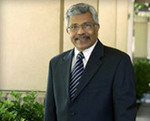
Pastor Mathew holds three graduate degrees in theology from Central and Westminster theological seminaries (USA) and is the founder and former Senior Minister of Grace Valley Christian Center. Originally a scientist from India, he is also a former professor