
Jesus Judges Fruitlessness
Matthew 21:18-22P. G. Mathew | Sunday, December 17, 1995
Copyright © 1995, P. G. Mathew
Remember the fig tree! In this passage we find Jesus during the last week of his life cursing a fig tree because it had no fruit. The tree withered immediately, and this miracle, as Dr. Herman Ridderbos and others have said, is prophetic symbolism of divine judgment against the fruitlessness of God’s people.
God is interested in fruit. In John 15, Jesus said the Father “cuts off every branch in me that bears no fruit,” and “if anyone does not remain in me, he is like a branch that is thrown away and withers; such branches are picked up, thrown into the fire, and burned up.” In Luke 3:8 John the Baptist said, “Produce fruit in keeping with repentance.” He further warned, “The ax is already at the root of the trees, and every tree that does not produce good fruit will be cut down and thrown into the fire.”
Now, of all the miracles that Jesus performed, this cursing of the fig tree is the only miracle of total judgment. All of his other miracles demonstrated the love of Jesus, but this one showed that Jesus is the God-appointed Judge. This judgment is specifically the judgment of religious hypocrites, who profess faith in God but who refuse to do the will of God. We need to examine ourselves to see whether we fall into this category, and if so, to repent and produce the fruit of holiness which God demands of us.
Jesus Is Looking for Fruit
Jesus sought fruit from a fig tree. We read about fig trees many places in the Bible. After they had sinned, Adam and Eve sewed themselves coverings from fig leaves, and possibly they were hiding among fig trees when God called them. Fig trees provide deep shade, and to sit under one’s own fig tree is a symbol of peace and great prosperity. Deuteronomy 8:8 tells us that this tree is characteristic of Palestine: “a land of wheat and barley, vines and fig trees. . .” In his omniscience, Jesus saw Nathaniel while he still under the fig tree. The botanical name for this type of fig tree is ficus carica , and a healthy specimen will bear three crops of fruit over a period of about ten months. The major crop comes from August until winter. Secondly, there are green figs, which we read about in the Song of Solomon 2:13. These green figs are produced during the winter, remaining all winter on the branches, and growing ruddy by the first sign of spring. These remain small and are easily blown away by wind. Thirdly, there are the first ripe figs, which stay on the tree through the winter and spring, ripening in summer from June on. These are the much sought-after, most delicious and flavorful figs. In Hosea 9:10 God compares Israel to them: ‘When I saw your fathers, it was like seeing early fruit on the fig tree” – most delicious and most flavorful–but Hosea 9:16 says “Ephraim is blighted, their root is withered, they yield no fruit.”
Jesus was on his way to Jerusalem from Bethany. He had entered the city the day before, drove the money changers and merchants out of the temple, and then went back to Bethany. Now it was Monday and he was going back to Jerusalem. Luke 21:37-38 shows that he had probably slept on the open hill of the Mount of Olives. He was poor and probably had not eaten anything. He woke early, prayed, and now was walking two miles with his disciples to Jerusalem.
Here we see Jesus in his human nature. He was hungry, tired, distressed and weary. He had slept outside, and had wept over Jerusalem, the Bible says. Then he saw something amazing–one fig tree on the roadside. Normally a fig tree had full leaves in June, but now, during Passover week in mid-April, this tree was full of leaves. When a fig tree was full of leaves, normally it also had fruits, because generally, the fruit appeared on the fig tree before the leaves.
Jesus was therefore attracted by this tree with its full leaves, and went to the tree in search of fruit. This fig tree symbolizes religious people, whether Israel or the church. The leaves symbolize religious profession: confessing faith in the true God, baptism, church membership, worshiping on a regular basis, prayer, witnessing to others about the true God, Bible study, giving testimonies, giving to the cause of religion, conducting family prayer and so on. The leaves symbolized every outward act of religious piety. When we make such claims, God has a right to expect fruit from us.
The Israelites claimed to be God’s people. They worshiped in the temple. They were sacrificing 250,000 animals for this Passover. The priests dressed in priestly vestments, offering prayers and observing rituals. But all this activity did not produce the fruit God wanted. The Pharisees judged everyone even though they had beams in their eyes. They gave to the needy, announcing it with trumpets so that they would be seen as generous people. They prayed long prayers, standing on the street corners and in the synagogues, but did so only to be seen of men. When they fasted, they disfigured their faces to show men how pious they were. They were false prophets, who appeared to be sheep, but inwardly, Jesus said, they were ferocious wolves. They pretended to be good trees, but they were bad trees. They piously said, “Lord, Lord,” but they were workers of iniquity. They prayed like this: “God, I thank you that I am not like other men–robbers, evildoers, adulterers–or even like this tax collector. I fast twice a week and give a tenth of all I get.” In Matthew 23:3 Jesus said of them, “So you must obey them and do everything they tell you. But do not do what they do, for they do not practice what they preach.” And verse 5: “Everything they do is done for men to see: They make their phylacteries wide and the tassels on their garments long; they love the place of honor at banquets and the most important seats in the synagogues; they love to be greeted in the marketplaces and have men call them ‘Rabbi.'” The entire chapter of Matthew 23 speaks about this idea of being full of leaves–external religious piety–but no fruit. Jesus calls the Pharisees and teachers whitewashed sepulchers, clean on the outside but full of rotten bodies and everything unclean on the inside.
But we need to take warning. This was not just the problem of Israel. In 1 Corinthians 11:17, Paul speaks to the Corinthian believers: “In the following directives I have no praise for you, for your meetings do more harm than good.” In other words, Paul says to the church that despite its outward appearance of spirituality, without the fruit of true godliness, it was better not to go to church.
Will Jesus Find Fruit?
What did Jesus find? The full leaves of this tree promised fruit, but he found none. He did not even find taksh –knob-like swellings on the branch which would indicate fertility. Although this tree was already in full leaf , it was totally barren. This was complete externalism, with no internal integrity, in other words. A fruit tree is to produce fruit, and if it does not, it is useless and worthless to its owner. Luke speaks about a fig tree in Luke 13:6-9. The owner went looking for fruit on this tree for three years, but there was none. PGM The tree was living for itself, producing leaves and using up the soil, but doing nothing for its owner. So the owner told his servant to cut it down. Fruitlessness means uselessness to God, which means immediate judgment.
All people are to live for the glory of God, and especially those who make religious claims. Like a fig tree, our fruit must come before our leaves. We are to bring forth fruit of the Spirit even before we make professions of faith. We receive people into the church on the basis of such fruit that is evident in the life of a Christian. This fruit is nothing other than Christ-likeness. The eternal purpose of God is for us to be conformed to the image of his Son. God demands the fruit of repentance, the fruit of the fear of God, the fruit of obedience to God from the heart, the fruit of delight in knowing God’s word, the fruit of delight in communion with him in prayer, the fruit of loving God and one’s fellow men, the fruit of serving others with great joy, even the fruit produced by the Holy Spirit–love, joy, peace, patience, kindness, goodness, faithfulness, gentleness, and self-control. He does not demand the works of the flesh, which are sexual immorality, impurity, hatred, discord, jealousy, selfish ambition, factions, envy, fits of rage and so on. No, he demands the fruit of good works, for which purpose he recreated us.
Jesus is looking for fruit, but the truth is, even some evangelical, Bible-believing professors and teachers today are teaching that we as Christians need not bear any fruit. This is documented in a book by Keith A. Mathison, Dispensationalism: Rightly Dividing the People of God , Presbyterian and Reformed Publishing, 1995. Mathison refers specifically to books by Zane Hodges, Absolutely Free! , and Charles Ryrie,So Great Salvation .
What do these teachers say about repentance? Mathison writes that in Absolutely Free, “Hodges argues that repentance has absolutely nothing to do with salvation and should therefore never be included in the gospel message.” (p. 97) In So Great Salvation Charles Ryrie “contends that repentance is not a part of conversion but simply a change of mind about something. It is not meant to be a part of the gospel message.” (p. 97)
What about faith? Citing Hodges, Mathison writes, “Faith is simply belief in the truthfulness of certain facts. It only occurs at a single moment in time.” (p. 98) In other words, one does not have to continue to believe. One can be an atheist after believing in the truthfulness of certain facts in the first time. Continuing to cite Hodges, Mathison says faith “is solely a work of man, not a gift of God.” (p. 98) What about the object of faith? “The object of faith is the collection of facts of the gospel message,” not the person of Jesus Christ. (p. 99) What about the effects of faith? “The only necessary effect of faith is salvation from the eternal penalty of sin. A life of continued growth in grace (progressive sanctification) and salvation from the power of sin are not necessary effects of faith.” (p. 100)
What about Christ’s Lordship? Citing Hodges: “There should be absolutely no aspect of submission to the Lordship of Christ in the gospel message” and Ryrie: “A person can accept Jesus as Savior without acknowledging him as the Lord of one’s life and without being willing to allow him control over one’s life.” (p. 102)
What about assurance of salvation? Mathison writes, “Hodges argues that ‘when a person believes, that person has assurance of life eternal.’ And a continuous lack of fruit in a ‘believer’s’ life should never cause him to question his salvation.” (p. 103) These are not the teachings of those who do not believe in the Bible; rather, these are the teachings of Bible-believing people.
Jesus is coming to us today. Will he find fruit in us? Will he find sure evidences of the Spirit’s work in us? Will he be pleased with us? Will he see us as light shining in the midst of darkness? Will he find us living the gospel life? He is not only the Savior but he is also the Judge. Paul says in 2 Corinthians 5:10-11, “For we must all appear before the judgment seat of Christ, that each one may receive what is due him for the things done while in the body, whether good or bad. Since, then, we know what it is to fear the Lord, we try to persuade men.”
Jesus Judges the Fig Tree
Jesus was hungry, but he did not curse this tree because of that. This is a miracle of judgment. Every miracle is significant, and particularly this miracle during the last week of his life. Jesus had been hungry before. After forty days of fasting, he was hungry and tempted to use his messianic power to turn stones into bread, but he did not. He knew that man lives by every word that proceeds out of the mouth of God, so he obeyed his Father. He was hungry when he was in Samaria, seeking the Samaritan woman. He was tired and hungry, but he ministered the water of eternal salvation to this woman. The disciples urged him to eat something, but he said to them, “I have food to eat that you know nothing about.” Then he said, “My food is to do the will of God who sent me and to finish his work.” So also Jesus was doing the work of God in cursing this fig tree. He did not curse the tree because he was hungry. He judged it for its fruitlessness as a symbol of God’s judgment upon unfruitful Israel and all people of God who live lives of hypocrisy.
The judgment upon this fruitless tree which claimed fruit by its leaves was judgment especially upon Israel. The people of Jerusalem were scrupulous in observing their religion, yet we know that the temple had become the den of thieves rather than the house of prayer for all nations. They claimed to be students of Scripture and yet they failed to understand it. They annulled the word of God by their own foolish traditions. Scripture spoke of a messiah, even Jesus Christ, but the religious leaders even then were plotting how to kill the meaning of Scripture, Jesus Christ, who was in their midst. They had the leaves of ritualism but lacked faith in God and in his word.
God was going to judge his people, as we read in Luke 19:43-44: “The days will come upon you when your enemies will build an embankment against you, and encircle you and hem you in on every side. They will dash you to the ground, you and the children within your walls. They will not leave one stone on another because you did not recognize the time of God’s coming to you,” that is, God’s visitation to save them. Look at Luke 21:6. The disciples were impressed by the magnificent temple, but Jesus said, “As for what you see here, the time will come when not one stone will be left on another; every one of them will be thrown down.” And in verse 20 and following: “When you see Jerusalem being surrounded by armies, you will know that its desolation is near. Then let those who are in Judea flee to the mountains, let those in the city get out, and let those in the country not enter the city. For this is the time of punishment in fulfillment of all that has been written. How dreadful it will be in those days for pregnant women and nursing mothers! There will be great distress in the land and wrath against this people. They will fall by the sword and will be taken as prisoners to all the nations. Jerusalem will be trampled on by the Gentiles until the times of the Gentiles are fulfilled.” You read the same thing in Matthew 23:37 and chapter 24.
In the parable of the fig tree in Luke 13:6-9, there was a delay in judgment. One more year of grace was granted by the owner to dig around the tree and fertilize it, to see whether it would produce fruit, but no such delay is mentioned here. The time of judgment had come. The savior, Jesus, becomes the judge. He cursed the fig tree and it withered from the root right away. This tree represented those who had profession without practice, the form of godliness while denying the power thereof, who were ever learning but never coming to acknowledge the truth, worshiping with their lips and not with their hearts, hearing but not repenting and believing. There comes a time of judgment of such hypocrisy. The owner has a right to expect the fruit of obedience, and he has come to see the fruit. Will he find us as fruitless and worthless trees, using up his resources for our own glory, not the glory of God?
God will execute judgment. In Matthew 21:43, we find a key to this cursing of the fig tree. Jesus said, “Therefore I tell you that the kingdom of God will be taken away from you and given to a people who will produce its fruit.” There are always people who are eternally chosen, whom God will effectually call, who will walk in his ways, but Jesus, the rejected stone, will fall on the others, and they will be pulverized (Matthew 21:44). That is exactly what happened to the chosen nation, Israel, when Jerusalem was destroyed in A.D. 70. The same thing has happened to the church down through the ages at times when God removes the candlestick of the church from various parts of the world. This can also happen to individual believers. Those who live a life of hypocrisy will soon wither. Like the third soil in Matthew 13, they are interested in pleasure, riches and other things, and they are soon choked. They can wither, even in a dynamic church.
Look at Revelation 3:1: “To the angel of the church in Sardis write: These are the words of him who holds the seven spirits of God and the seven stars. I know your deeds; you have a reputation of being alive, but you are dead.” Here you see the idea of upholding one’s reputation, of perception management, of doing religious things in order to be seen by others while in our personal life, when we are alone, we do our act differently. When the doors are closed, we do what we want, but when we are in society we want to appear to be very pious.The church at Sardis maintained the reputation of being alive and dynamic, of loving God and praying and fasting. But the one whose eyes are like flaming fire looked at the church, and what did he say? “You are dead.” So he says, “Remember, therefore, what you have received and heard. Obey it and repent. But if you do not wake up, I will come like a thief and you will not know at what time I will come to you.” This is a threat.
May God help us from perception management, from hypocrisy, from keeping up with our reputation. The Lord of the church is walking among us. His eyes are like flaming fire, and he knows–he knows who we are in our thoughts, in our imaginations and what we do when we are alone. May we all repent today and live to bear fruit for God’s glory. May we abide in Christ in order that we may bear fruit, more fruit and much fruit for the glory of God the Father.
We Must Examine Ourselves
Here is a sobering thought: “A good tree cannot bear bad fruit, and a bad tree cannot bear good fruit.” (Matthew 7:18) What does this teach us? It teaches that if a person is elect of God and God has effectually called him or her through regeneration, then that person will repent of sin, trust in Jesus Christ, persevere and bring forth fruit. No person who is chosen by God will bear bad fruit. Every person chosen and called by God will bear good fruit.
This means we need to examine ourselves to see whether we are that good tree. And Jesus continues, “Every tree that does not bear good fruit is cut down and thrown into the fire,” and then he says, “By their fruit you will recognize them.”
Joseph did not have a church with him in Egypt, but he was not a hypocrite. Potiphar’s wife was trying constantly to seduce him, but he said, “How then could I do such a wicked thing and sin against God?” (Genesis 39:9) This is what it means to lead a life of integrity, a life in which we see God always, even when we are in our room and the door is locked. We understand that we live before God. His eyes are like flaming fire. He sees me, and therefore I will do what is pleasing in his sight.
There are many other examples of this in the Bible, including Daniel and his friends, who lived in Babylon in the same way, practicing the presence of God. They refused to disobey his word. The ultimate example is Jesus Christ, who always did that which was pleasing in God’s sight.
In due course all hypocrites shall wither from the root up. Remember Lot’s wife! She was religious all her life, but eventually she was revealed as a hypocrite and became a pillar of salt, judged by God. In conclusion, we need to understand that, like the fig tree, we all are cursed. We come cursed from our mother’s womb, destined to be damned, judged and sent to hell. But the gospel says that Jesus came to take our curse upon him. So while we look at this fig tree, let us also look at the cross where Christ died, having taken our curse upon him, in order that God’s blessings may come upon us through Jesus Christ. That’s the gospel. Why should we not, then, trust in him, and live a life of integrity, sincerity? We are asked to worship God in spirit and in truth.
It is my prayer that God will not judge us today as he judged the fig tree, but that he will give us another year of mercy and grace, so that we might repent and forsake game-playing, hypocrisy, perception management, and using God’s resources for our own glory rather than for fruit for him. This passage brings a warning for all of us because we are susceptible to hypocrisy. We need to examine ourselves to see whether we are honest, sincere, authentic good trees. May God’s Spirit help us discover and discard all hypocrisy, that we may turn to God in faith and bear fruit to please him.
Heavenly Father, we must confess that we cannot even examine ourselves. We need your assistance, O Holy Spirit. Assist us to plumb the depth of our being to see whether we play games before you, like Adam, who carefully sewed leaves of the fig tree and clothed himself. What foolishness, to think that God Almighty somehow does not see! So, O God, help us to abandon all our attempts to manipulate reputation. One day we have to stand before you, and you will judge us according to truth. To many people, such judgment may take place even in this life. We pray that you help us in our self-examination, that we may change our ways. Help us to consider our ways and change. Grant us the fruit of repentance, godly repentance, and help us to demonstrate that repentance through our true piety. We pray that you forgive us all our sins, for we believe that your Son took all our curses upon himself and he was cursed in our place on the cross. Therefore, there is no curse for us, no hell for us, no wrath of God for us. For us there remains only blessing. Out of his fullness we receive grace after grace after grace. We thank you, O God, for Jesus Christ. Have mercy upon us, Father, Son and Holy Spirit. Help us to be that good tree that produces good fruit for the glory of our God. For we pray in Jesus’ name. Amen.
Thank you for reading. If you found this content useful or encouraging, let us know by sending an email to gvcc@gracevalley.org.
Join our mailing list for more Biblical teaching from Reverend P.G. Mathew.
About the Speaker
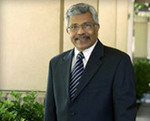
Pastor Mathew holds three graduate degrees in theology from Central and Westminster theological seminaries (USA) and is the founder and former Senior Minister of Grace Valley Christian Center. Originally a scientist from India, he is also a former professor