
Jesus Fulfills Prophecies
Isaiah 11:1-5P. G. Mathew | Sunday, December 15, 1996
Copyright © 1996, P. G. Mathew
For Christians, Christmas is the celebration of the incarnation of Jesus Christ. The incarnation is not an unanticipated surprise or a freak of nature, as some people might maintain. No, it is the fulfillment of prophecy, the fulfillment of God’s great promise to grant us the seed of the woman who would crush the head of the serpent. In this study we will examine the scriptures which received their fulfillment in the incarnation and virgin birth of Jesus Christ our Savior.
First, though, I must make that point that in order to believe in the virgin birth of Jesus Christ, which the Bible clearly teaches, one has to believe in the God whom the Bible reveals. This God, as J. Gresham Machen says, is “the Creator of the universe yet immanent in it, but also eternally separate from it and free.” Many people speak about the birth of Christ as though it was something that happened in nature, but nature did not and could not produce this historical event. Jesus of Nazareth came into the universe from outside the universe to do what nature could never do.
The Necessity of Faith in the Virgin Birth
Christians must believe in the supernatural virgin birth of Christ. Why? If they refuse to believe in the virgin birth of Jesus Christ, they cannot be saved by him. Jesus Christ our Savior was incarnate by the Holy Spirit and born of the virgin Mary. He is Immanuel, God with us, Christ the Lord, Son of the Most High, the Holy One. The essence of Christianity is that God took upon himself perfect human nature to be our mediator.
In this church we maintain that belief in the virgin birth of Christ is necessary for our salvation. That is not merely our peculiar belief. We believe in it because the Bible teaches it and the creeds affirm it. If we examine the Apostles’ Creed, which comes to us from the second century after Christ, we read, “I believe in Jesus Christ his only Son, our Lord, who was conceived by the Holy Spirit and born of the virgin Mary.” The Nicene Creed, which comes to us from the early part of the fourth century, also tells us that our Lord was incarnate by the Holy Spirit by the Virgin Mary and was made man. The Nicene creed also affirms the miracle of the virgin birth, the supernatural aspect of it. And the Athanasian Creed says, “Furthermore, it is necessary to eternal salvation, that he also believe faithfully the incarnation of our Lord Jesus Christ. Now the right faith is that we believe and confess that our Lord Jesus Christ the Son of God is both God and man. He is God, of the substance of the Father, begotten before the worlds, and he is man, of the substance of his mother, born in the world; perfect God, perfect man, of reasoning soul and human flesh subsisting; equal to the Father as touching his Godhead, less than the Father as touching his manhood. Who, although he be God and man, yet he is not two but he is one Christ; one, however, not by conversion of Godhead into flesh, but by taking of manhood into God; one altogether not by confusion of substance but by unity of person. For as the reasoning soul and flesh is one man, so God and man is one Christ.” The Athanasian Creed insists that belief in the virgin birth of Christ is necessary for salvation. Thus, if we do not believe in in the virgin birth, then we do not have a Savior, Christ the Lord, who is able to save us.
Some refuse to believe in the virgin birth because it means that a child was born without the begetting act of man. However, if one refuses to believe in the virgin birth, he or she will have trouble believing in any other miracle the Bible teaches. If one believes in a truly transcendent triune God, as J. Gresham Machen says, one would have no problem in believing in the miracles of this God as recorded in the Holy Scriptures. When I hear people say that because they are so intelligent they are unable to believe in miracles, I tell such people that their problem is not their intelligence, but rather that they are blinded in their understanding and they do not see the eternal God who created the universe by the word of his power yet is beyond creation. Any person who believes in an eternal, transcendent, creator God will have no trouble believing in the virgin birth, the resurrection, the ability of Jesus Christ to walk upon the waters or any other miracle recorded in the Bible.
Incarnation Fulfills Prophecies
The incarnation of the Lord Jesus Christ is, as I said, no accident. The historic event of the virgin birth, which the New Testament records, was foretold in the prophecies of the Old Testament. It is good to study the prophecies of the Old Testament, where God, who calls the end from the beginning, reveals to us what is going to happen long before such things ever take place. No one is able to prophesy and see the future except God. But he reveals the future to us through his prophets in the Holy Scriptures, and it is good to pay attention to such revelation.
The Seed of Woman
The first prophecy came in the third chapter of Genesis. The very day sin entered into the universe and man died, God gave a prophecy of great hope: “I will put enmity between you and the woman, and between your offspring and hers; he will crush your head, and you will strike his heel” (Gen. 3:15). The seed of the woman would one day crush the head of all his enemies, and so in this verse God promises to save his people through this seed of a woman.
In Genesis 22:18 it is clearly stated that this seed is to come through Abraham. God chose Abraham, a pagan, and saved him. Then he told him, “through your offspring” that is, the offspring, the seed of Abraham,”all nations on earth will be blessed.” That is the gospel, and we can rejoice in this prophetic disclosure of the seed of the woman who has become our salvation, who paid ransom by his life for our salvation!
The Great King
In Genesis 49:10 we are told, “The scepter will not depart from Judah nor the ruler’s staff from between his feet, until he comes to whom it belongs and the obedience of the nations is his.” Here we see that this one is also a seed of Jacob, a seed of Judah. He is the King of kings and the nations must obey him, we are told here prophetically.
In Numbers 24:17 we find a prophecy that God gave to a man named Balaam. Balaam was a pagan but God opened his eyes and gave him a vision of this one who was going to be the King of kings and Lord of lords. And Balaam the pagan said, “I see him, but not now; I behold him, but not near.” Balaam saw him who was promised, but he was not going to come then. Then he continued, “A star will come out of Jacob; a scepter will rise out of Israel.” This one would be a king who had a job to perform. What was he going to do? In Genesis 3:15 we were told he would crush the head of the serpent. And here Balaam says he will crush the foreheads of Moab, which is a metaphor for all the enemies of God. This star, this king is going to come and his job is to crush all his enemies. Keep that in mind if you are an unbeliever in Jesus Christ.
The Deity of Christ
In Psalm 45:6-7 we find a strange statement, “Your throne, O God, will last forever and ever.” In context this has reference to the Son of David, Jesus Christ, and affirms his deity. “Your throne, O God, will last for ever and ever; a scepter of justice will be the scepter of your kingdom. You love righteousness and hate wickedness; therefore God, your God, has set you above your companions by anointing you with the oil of joy.” Here we see deity and humanity. He is God, and yet he calls God “God.” This is a prophecy concerning our Lord Jesus Christ.
In Micah 5 beginning with verse 1 we read, “Marshal your troops, O city of troops, for a siege is laid against us. They will strike Israel’s ruler on the cheek with a rod.” Here Micah is speaking about the domination of Israel and Judah by all the powers of this world. God had called them to exercise dominion over his people because they refused to believe in him. But now in verse 2 he says, “But you, Bethlehem Ephrathah, though you are small among the clans of Judah, out of you will come for me one who will be ruler over Israel,” as we were also told by Jacob and others, “whose origins are from of old, from ancient times.” This prophecy comes to us from the ninth century before Christ. And here again we learn that this one is not just a man. This ruler is God. He is from eternity.
In Micah 5:3 we are told, “Therefore Israel will be abandoned until the time when she who is in labor gives birth. . . ” That is speaking about Mary, the mother of Jesus, who would give birth to this one, this God/man, the King of kings, who is of ancient times. And in verse 4 we read, “He will stand and shepherd his flock. . .” Yes, this one, Jesus Christ, is the good shepherd. He gives his life for the sheep, saves them, feeds them and leads them to still waters. It is he who anoints our head with oil. And Micah continues, “He will stand and shepherd his flock in the strength of the Lord, in the majesty of the name of the Lord his God. And they will live securely, for then his greatness will reach to the ends of the earth. And he will be their peace.” Micah is not speaking about everyone; he is speaking about God’s people. He is not even speaking about national Israel; he is speaking only about those who have been chosen from ancient times and for whose salvation God the Father sent the Son that he may die on the cross to effect their salvation and therefore their peace.
Isaiah’s Prophecies
We find prophecies about Jesus Christ in the book of Isaiah, particularly in the seventh, ninth and eleventh chapters. In this study we will consider the prophecies in the seventh and ninth chapters, beginning with Isaiah 7 where the prophecies come to a king of Judah named Ahaz, who was a son of David but wicked.
In 2 Kings 16 we get further understanding of Ahaz. In verses 1 and 2 we read, “In the seventeenth year of Pekah son of Remaliah, Ahaz the son of Jotham the king of Judah began to reign. Ahaz was twenty years old when he became king and he reigned in Jerusalem sixteen years. Unlike David his father, he did not do what was right in the eyes of the Lord his God.” What did Ahaz do? Verses 3 and 4: “He walked in the ways of the kings of Israel and even sacrificed his son in the fire, following the detestable ways of the nations the Lord had driven out before the Israelites. He offered sacrifices and burned incense at the high places, on the hilltops and under every spreading tree.” Ahaz was a wicked king.
But what happened to Ahaz? In verse 5 we read, “Then Rezin king of Aram and Pekah son of Remaliah king of Israel marched up to fight against Jerusalem and besieged Ahaz. . .” Do you see what is happening here? Here is this king who is wicked and who abandoned God, preferring to follow the ways of Israel. All of a sudden he finds himself besieged by a coalition of Aram and Israel who came together to conquer and depose him and to put someone else, a weakling, as king in his place. In other words, Aram and Israel were coming to destroy the house of David which God had promised would endure for ever and ever, and this happened in 735 B. C. As Assyria rose in prominence and power, Damascus and Samaria joined together to oppose the spread of Assyrian power.
A Shaking King
How did Ahaz react to the news of this coalition? In Isaiah 7:2 we read, “Now the house of David was told, ‘Aram has allied itself with Ephraim’; so the hearts of Ahaz and his people were shaken as the trees of the forest are shaken by the wind.” Every unbeliever in Jesus Christ, when faced with trouble, will be shaken to the very core of his being. Why? He has no foundation to stand upon. He has no Savior, no Redeemer, no God. So here we see a king being shaken.
Ahaz, of course, was listening to his counselors, and he began to think about becoming a vassal to the rising Assyrian power. He was a politician, which, by definition, means he was one who listens to polls. So Ahaz looked and felt and smelled and listened, not to God, but to everyone else. What was he hearing? “Ahaz, the best way to deal with this situation is to become the vassal of Assyria. Empty the treasury and give Assyria all the monies you have. Become a vassal, a servant, of Assyria. Abandon your trust in Jehovah! Abandon his Davidic covenant. Become an apostate. Serve the king of Assyria and serve his gods.” These were the ideas that were going into the mind of Ahaz.
God’s Word for Ahaz
At this crucial time God, in his great mercy and love toward the house of David, sent Isaiah the prophet to help wicked, unbelieving King Ahaz. Ahaz did not seek God, and yet God took the initiative toward him. So the Lord said to Isaiah, “Say to [Ahaz], ‘Be careful, keep calm and don’t be afraid'” (Is. 7:4). Let me assure you, when God speaks to us, this is what he says to us in the midst of any particular problem which is shaking us. In other words, God is saying, “Believe in the Lord Jesus Christ and you shall be saved.” And so, as he spoke through Isaiah to Ahaz, so he said to us: “Be careful, be calm, and don’t be afraid.”
Then God gave a prophecy for Ahaz. “Do not lose heart because of these smoldering stubs,” meaning Aram and Israel, the two nations coming against Judah, were spent forces. They were smoldering stubs. They were finished, with no vitality left. The transcendent, almighty, all-seeing, all-governing God was telling Ahaz, “Don’t be afraid. Believe me, these two nations are nothing. They are finished.” Later in that passage it says that in a short time they would be gone, and that was fulfilled within a few years. In 732 Assyria came and conquered Aram and devastated Samaria. By 722 Samaria was completely defeated. So God was saying to the wicked king of Judah, “Be careful. Don’t do anything crazy. Don’t be a vassal to Assyria. Forget about political ingenuity. Listen to the word of God and you shall be saved, because I tell you, these two kingdoms are nothing.”
Ahaz had listened to the politicians of his day. He took polls and listened to his own head and the talking heads around him. Ahaz had listened to everyone else, but now he needed to listen to God. In verse 7 we read, “Yet this is what the Sovereign Lord says. . .” The Adonai, the Almighty, self-existing, self-sufficient, eternal God was speaking to Ahaz and he needed to listen.
Brothers and sisters, are we, like Ahaz, listening to everyone else? And when we hear their words, are we shaken to the very core of our being? If so, it is time to look up and to listen to the the word of Adonai, the Sovereign One, the eternal and almighty God–the word of the one who rules the universe.
What did God tell Ahaz? “It will not take happen,” meaning Aram and Israel could not come, conquer, and destroy the house of David. Why? God himself had made a covenant with David that his kingdom would endure forever and ever. But what did Ahaz do? He did not want to listen to God.
Ask for a Sign!
Ahaz treated Isaiah with contempt and refused to listen to God’s clear word. But in verse 10 we read, “Again the Lord spoke to Ahaz, ‘Ask the Lord your God for a sign, whether in the deepest depths or in the highest heavens.'” In mercy and grace God was speaking to Ahaz and encouraging him to increase his faith. He told him to ask for a sign, for anything that would help Ahaz believe. God was graciously putting himself at Ahaz’s disposal and offering to move heaven and earth to cause him to believe in God.
Throughout the Old Testament God gave signs. Gideon asked for a sign–not in unbelief but in order to increase his faith–and God gave him two signs. In Isaiah 38 we read that Hezekiah, Ahaz’s son, was given a sign to increase his faith. The shadow miraculously went back rather than forward. Why did God do this? You see, he is interested in causing our faith to grow. So God tells us sometimes, “Come on, ask me to do something. I will do something for you that will increase your faith so that you can believe in the gospel.”
The Response of Ahaz
How did Ahaz respond to God’s gracious offer? Look at verse 12. Ahaz was an absolute hypocrite, but he clothed his answer in piety. He said, “I will not ask; I will not put the Lord to the test.” Probably he was referring to Deuteronomy 6:16, which says we should not test and prove God. But Ahaz was not doing what God wanted him to do. When God himself proffers us a sign, we had better receive it. If we deny it, it is sheer unbelief. Many, many people reject God in terms of piety. Piety!
What did Isaiah tell Ahaz in verse 9? “If you do not stand firm in your faith,” in other words, if you do not believe, “you will not stand at all.” What is the simple translation? Believe on the Lord Jesus Christ and you will be saved; if you do not believe, you won’t be saved. In other words, Isaiah was saying, Ahaz, don’t trust in anything but God. Why? Political ingenuity will not help us. Listening to our own head will not help us. Listening to our own counselors will not help us. Taking polls will not help us. What is the only thing that will help? If we believe on the Lord Jesus Christ we will be saved.
In verse 13 we read,”Then Isaiah said, ‘Hear now, you house of David! Is it not enough to try the patience of men? Will you try the patience of my God also?'” I personally have experienced what Isaiah is speaking about. When I come and speak to people and they do not listen, what does that do to me? It tries my patience. It wearies me. But forget about my weariness. Here Isaiah is saying if we do not listen to God’s word, whom are we wearying? God Almighty himself.
A Prophetic Sign
In spite of Ahaz’s unbelief, God imposed a sign upon him. In other words, in verse 14, God gave Ahaz a sign, not necessarily for Ahaz’s comfort but to tell his people that God will save them. He was reassuring his people that the Davidic covenant would not fail and that one day there would come a person who would crush the head of the serpent, crush the forehead of Moab, defeat all enemies, shepherd his people and give them peace. God proceeded to speak, to give a sign, which Ahaz could take or leave.
God told Ahaz, “Hear now, you house of David! Is it not enough to try the patience of men? Will you try the patience of my God also?” And then he says, “Therefore,” meaning despite Ahaz’s unbelief, “the Lord himself will give you a sign. . .” which would tell Ahaz that he was going to be devastated and would take his country into devastation for six hundred years, and at the end one would come from the house of David who would be the Savior.
What was the sign? “The virgin will be with child and will give birth to a son, and will call him Immanuel,” which means God with us. We see the word Immanuel two other times in Isaiah 8:8,10. Immanuel is an individual whose is the land of Israel.
A Virgin Shall Conceive
Isaiah said “The virgin will be with child.” This word used for virgin is almah . In every place in the Old Testament where that word appears in a clear and explicit context,almah refers to an unmarried female of marriageable age, a virgin. We find this word used in Genesis 24:43, among other places. So we must ask what the Holy Spirit is saying in his usage of this word. And we conclude that he is speaking about a miraculous birth, one in which a virgin conceives. Isaiah used the word almah as that which came the nearest to expressing the miracle of the virgin birth.
In the Septuagint, the Greek translation of the Old Testament, almah is translated by the word parthenos , which indisputably means virgin. And so in his gospel, Matthew writes in chapter 1, verse 23, that what happened to Mary was in fulfillment of what the Lord had said through the prophet, “The virgin will be with child and will give birth to a son, and they will call him Immanuel–which means ‘God with us.'”
Unbelief Brings Destruction
Did this prophecy benefit Ahaz? No. Did he listen to the word? No. In 2 Kings 16 we read that he emptied the treasury and sent all the money to Assyria, an action which resulted in great trouble for Judah. Through Ahaz’s unbelief Judah came under Assyrian domination, Babylonian domination, Medo-Persian domination, Greek domination, and Roman domination–six hundred years of domination and devastation. The house of David declined and eclipsed because of the singular rebellious unbelief demonstrated by Ahaz.
We can apply this in our own lives. There are some people I have met with, speaking to them, beseeching them, and doing everything I could to bring God’s word to them. Did they respond in faith? No. And in those situations the result I have seen is not faith but destruction, devastation, grief and everything else–not only of the individuals but of their families as well. Let me assure you, these things will happen to us also if we do not believe in God’s word. We will experience destruction, devastation, domination, misery, slavery, apostasy, decline, and poverty. We must believe on the Lord Jesus Christ and be saved–we and all our household!
Light in Darkness
We find another prophecy about Jesus Christ in Isaiah 9. The chapter opens telling us about light in the midst of darkness. It is speaking about salvation, not for everyone but for God’s people. Let me tell you, Jesus did not come to save everyone. No, he came to save only his people.
And so the ninth chapter of Isaiah begins, “Nevertheless, there will be no more gloom for those who were in distress. In the past he humbled the land of Zebulun and the land of Naphtali, but in the future he will honor Galilee of the Gentiles, by the way of the sea, along the Jordan–” And in verse 2 we read, “The people walking in darkness have seen a great light.” That is speaking about Jesus Christ, who was brought up in Nazareth, and about his ministry in that part of the world. Not everyone saw the light, but his people did.
Isaiah continues, “on those living in the land of the shadow of death a light has dawned. You have enlarged the nation and increased their joy; they rejoice before you. . . .” That is what happens to people who believe on the Lord Jesus Christ. They emerge from pitch darkness into the marvelous light and there is joy. Gloom is gone, misery is gone, guilt is gone, and they are saved to the uttermost. And such people enter into light that shall never dim. They enter into joy that ever increases into greater and greater joy. This is what Isaiah is speaking about.
In verse 4 we read, “For as in the day of Midian’s defeat, you have shattered the yoke that burdens them.” This one Isaiah prophesied about–this seed of the woman who is to crush the head of the serpent and the foreheads of Moab–is the one who will destroy sin, Satan, and hell. (PGM) He is the one who will liberate us and bring us into marvelous light and great joy. It is he who removes death and gives us eternal life.
The Reason for Celebration
After this wonderful depiction of salvation in Isaiah 9:1-5, Isaiah then gives us the reason for this great salvation and celebration. Verse 6 says, “For to us a child is born. . .” What is the reason? To us–to the elect of God in the plan of God for our salvation–a child is born. This speaks of the human nature of the our Lord Jesus Christ, who was perfect man.
“To us,” Isaiah says again, “a son is given. . .” The eternal Son of God, the son of David, the King of kings is given to us. A child! A son! “. . . and the government will be on his shoulders.” To this one, this child, this son, is given all authority in heaven and on earth. He is the Sovereign Lord of the universe and unto him shall the obedience of the nations be. He is not just the God of the Americans. He is the God of the Chinese, he is the God of the Africans, he is the God of the Indians. He is the God of everyone. To him obedience will be rendered, as we read in Philippians 2:10, “every knee should bow. . . and every tongue confess Jesus Christ is Lord, to the glory of God the Father.”
“To us a child is born, to us a son is given.” This one is the Sovereign Lord, which means that nothing happens in the universe without his express permission. And what shall this one be called? “Wonderful Counselor,” Isaiah says. He is wonder, which speaks about his deity, and he gives supernatural counsel. He is deity, in other words.
But if you do not believe that, look at what else he is called: “Mighty God.” This child, this son, this ruler is mighty God, as we saw the Athanasian Creed affirming. We find the same phrase in Isaiah 10:21, “A remnant will return, a remnant of Jacob will return to the Mighty God.” We must understand that this child is given as a gift. “For God so loved the world that he gave his only begotten Son” as a gift, as the one who will shepherd us, give us peace, and shatter our enemies. This one is God–Mighty God–deity and humanity.
What else does Isaiah tell us about this one? “Of the increase of his government and peace there shall be no end.” Every space in the universe shall be filled by his sovereignty. Not a nook or a crevice will remain where his sovereignty is not felt. He will deal with our little unbelief now and then. “He will reign on David’s throne,” this son of David, “and over his kingdom, establishing and upholding it with justice and righteousness, from that time on and forever.” And then we see a signature: “The zeal of the Lord Almighty will accomplish this.” God put his seal on this prophecy to tell us that because of his love for his people he would perform it. A child would be born, a son would be given, and to him would be given all rule and power. He would crush the head of the serpent, shepherd his people, and be the King of kings and Lord of lords.
Have You Made Up Your Mind?
Have you made up your mind about the gospel? Are you like Ahaz who told Isaiah, “I have made up my mind. Don’t disturb me. Don’t tell me facts”? I have spoken to some people about the gospel, but they have made up their minds, and they ask me not to disturb them. They do not want to listen to me. But when God sends someone to speak to us, he is demonstrating his love for us. In spite of our problems, difficulties, wickedness, and unbelief, God loves us enough to send someone to us. And what does he say? “Be careful. Be calm. Don’t be afraid. Everything will be all right. I will help you. You will stand by faith and trust in the sovereign Lord, rather than in this little Assyrian power.”
Some people will respond to God’s gracious words and say, “No, I have made up my mind. Don’t disturb me. I want to effect salvation by my own works and not by the gift of God’s grace.” How mistaken we can be! What we need is not ingenuity and self-understanding. We need faith in our Lord Jesus Christ.
The truth is, a child was born and a son was given. And the truth is, the government is upon his shoulders, and that is why he destroyed the burdens that were resting on your shoulders. The truth is, he is the King of kings and Lord of lords, and he defeated all enemies on the cross. That is the truth, brothers and sisters.
Do you know what the gospel is? It is that God loves us and sent his Son to ransom us. And the psalm 49:7,8 tells us that the ransom for a man’s life is costly. No one can pay it. But what did Jesus say? “The Son of Man did not come to be served, but to serve, and to give his life as a ransom for many.”
I am not Isaiah or Jeremiah, but I am a preacher of the gospel, commissioned and sent to urge you to trust in Jesus Christ and be saved. Have you wearied God with your arrogant words as Ahaz did? Have you been rebellious, stubborn, pretentious, proud, hypocritical and self-adulating? If so, may you repent even now and believe on the Lord Jesus Christ. May God generate faith in you that you may trust in his Son Jesus Christ our Lord and be saved, that you may be brought out of your darkness into his marvelous light, leaving your gloom and coming into joy unspeakable. Amen.
Thank you for reading. If you found this content useful or encouraging, let us know by sending an email to gvcc@gracevalley.org.
Join our mailing list for more Biblical teaching from Reverend P.G. Mathew.
About the Speaker
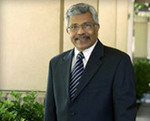
Pastor Mathew holds three graduate degrees in theology from Central and Westminster theological seminaries (USA) and is the founder and former Senior Minister of Grace Valley Christian Center. Originally a scientist from India, he is also a former professor