
The Coming Day of Reckoning
Matthew 25:14-30; Luke 19:11-27P. G. Mathew | Sunday, January 21, 1996
Copyright © 1996, P. G. Mathew
The parable of the talents found in Matthew 25:14-30 teaches us about the coming day of reckoning for all people. Jesus told this parable to his disciples right before he went to the cross to die for the sins of the world. He knew that on the third day he would rise from the dead, later ascend into heaven, and be seated on the right hand of God. He knew he would return to the earth a second time in glory and power to usher in the kingdom of God in its full manifestation and exercise his kingship. At that time everyone will submit to him and his disciples will be judged by him according to the service they have rendered to him. A similar parable, the parable of the minas, is found in Luke 19:11-27. Both parables teach the responsibility of Christ’s disciples to serve him during the time of his absence from the world, before he comes again. There are three points I would like discuss from this parable: first, trust, meaning entrustment; secondly, trade; and thirdly, the test.
The Master’s Trust
In the parable of the talents we are told about a master who was going on a long journey and who would return only after a long time. In Luke 19:11 we read about some disciples who thought that the kingdom of God was going to come in its full manifestation immediately. Jesus told them the parable of the minas to teach that it would not happen right away. Similarly, the parable of the talents tells us there is going to be a long period when Christ is absent from this world before he comes again. The master entrusted his property to his servants so they could do business with it in his absence and thus increase it for him. He did not make his distribution arbitrarily, but based it upon his understanding of each servant’s abilities. One servant received five talents; another, two; and another, one. In Bible times a talent was a unit of weight, weighing between fifty and eighty pounds, depending on the country. It could be the highest unit of money, depending on whether it was made of copper, silver or gold. Some talents were valued at about six thousand denarii, worth twenty years’ of one’s labor. A mina, on the other hand, was only worth about one hundred denarii, three months’ labor. In Matthew 18:23 we read about a master who forgave a debt of ten thousand talents, which was a very huge sum of money, which symbolizes the cost of our salvation. These slaves, like all slaves of the time, understood that their master’s will was for them to trade and make profit for him. Wall Street loves this parable because it promotes capitalism and doing business for profit. However, the essential teaching of this parable has nothing to do with making money, but rather, with doing the will of God diligently during Christ’s absence.
What Is the Trust?
What did the master, Christ, entrust to his servants? First, if we are Christ’s servants, he entrusted us especially with the gospel of salvation. Christ’s death on the cross in behalf of sinners produced this gospel. Paul referred to this entrustment in 1 Timothy 6:20, “Timothy, guard what has been entrusted to your care,” and 2 Timothy 1:14, “Guard the good deposit that was entrusted to you. Guard it with the help of the Holy Spirit who lives in us.” The gospel of salvation saves us, and the moment we are saved, we are entrusted with the gospel to do business with it.
What else does God entrust us with? We are entrusted with the Holy Spirit. In 1 Corinthians 12:7 we read, “Now to each one a manifestation of the Spirit is given for the common good.” We are given grace as an entrustment, as we read in Ephesians 4:7, “But to each one of us grace has been given as Christ apportioned it.” We are given gifts. In Romans 12:6 Paul says, “We have different gifts according to the grace given us.” In 1 Peter 4:10 Peter says, “Each one should use whatever gift he has received to serve others, faithfully administering God’s grace in its various forms.”
Why does God give us this entrustment? We are to serve God by serving others with the gospel and with the various spiritual gifts God has entrusted to us. The purpose of the Christian’s life is to glorify God and to enjoy him forever. Many misunderstand this and think the purpose of the Christian life is to serve and please ourselves. But self-serving servants will not bring profit to Christ when he comes. Such servants, by their self-serving, will prove themselves false Christians.
God saved us so that we could serve him as Lord and Master. That is what “Jesus is Lord” means. He has entrusted us with the glorious gospel; given us the gift of the Holy Spirit, who has distributed to each one of us spiritual gifts; and given us natural talents, time, money, and property. We are to serve him with all of these.
Trading for the Master
How do we serve? We must trade with our entrustment to increase it and make a profit for our Master. That is what an entrustment is–it does not belong to you, but to the one who entrusted you with it. So we must evangelize the world. We must serve the people of God’s church. Paul said, “Woe to me if I do not preach the gospel!” (1 Cor. 9:16) He said, “I am under obligation both to Greeks and non-Greeks, both to the wise and the foolish.” (Rom. 1:16) All must hear the gospel of salvation because it alone is the power of God unto salvation to everyone who believes.
This was the entrustment Jesus Christ gave before his ascension into heaven: “Go and make disciples of all nations, baptizing them in the name of the Father and of the Son and of the Holy Spirit, and teaching them to obey everything I have commanded you.” He also said, “You will receive power when the Holy Spirit comes on you; and you will be my witnesses in Jerusalem, and in all Judea and Samaria, and to the ends of the earth.” We are the salt of the earth, and we are to shine as light in the world, that those who dwell in darkness may come to see light. Are angels entrusted with this precious talent of the gospel? No, we are. Cornelius the Gentile was directed to send for St. Peter to preach the gospel to Cornelius and his household, that they may hear, believe and be saved. The moment a person is saved by Christ, he or she is entrusted with the gospel to do business with it. This is the sole purpose of our lives!
We have to be very diligent in our business for our master. Both the one entrusted with five talents and the one entrusted with two talents began to trade with their talents immediately. They did not say to themselves, “Our master is gone. Let’s relax a little; then we can do business. What’s the hurry? He went on a long journey. He won’t be back for a long time. We have time to do business later.” No, these servants set out immediately to do business for their master. They were diligent, untiring and hardworking.
Paul is an example of such servants. In the books of Acts and 2 Corinthians you see how he worked diligently so that he could produce great profit for the one who entrusted him with the gospel. He said in 2 Corinthians 6:3-10: “Rather, as servants of God we commend ourselves in every way: in great endurance; in troubles, hardships and distresses; in beatings, imprisonments and riots; in hard work, sleepless nights and hunger; in purity, understanding, patience and kindness; in the Holy Spirit and in sincere love; in truthful speech and in the power of God; with weapons of righteousness in the right hand and in the left; through glory and dishonor, bad report and good report; genuine, yet regarded as impostors; known, yet regarded as unknown; dying, and yet we live on; beaten, and yet not killed; sorrowful, yet always rejoicing; poor, yet making many rich; having nothing, and yet possessing everything.” And in 2 Corinthians 11:23 Paul says, “Are they servants of Christ? (I am out of my mind to talk like this.) I am more. I have worked much harder, been in prison more frequently, been flogged more severely, and been exposed to death again and again. Five times I received from the Jews the forty lashes minus one. Three times I was beaten with rods, once I was stoned, three times I was shipwrecked, I spent a night and a day in the open sea, I have been constantly on the move. I have been in danger from rivers, in danger from bandits, in danger from my own countrymen, in danger from Gentiles; in danger in the city, in danger in the country, in danger at sea; and in danger from false brothers. I have labored and toiled and have often gone without sleep. . .” and so on.
Paul understood the importance of trading for the Master. In 2 Corinthians 5:10 he said, “For we must all appear before the judgment seat of Christ, that each one may receive what is due him for the things done while in the body, whether good or bad.” Like Paul, these servants knew their master would return and settle accounts with them. They knew they had to give an account to him of their actions. They also knew they were not their own. They were bought with a price, and therefore they must serve their master. So they made it their goal to please him.
What was their attitude as they served their master? They served joyfully. They were grateful for their salvation and loved Jesus Christ. Their service was not tedious drudgery. In 2 Corinthians 5:14 St. Paul says, “For Christ’s love compels us, because we are convinced that one died for all, and therefore all died. And he died for all that those who live should no longer live for themselves but for him who died for them and was raised again.” When we love someone who died for our salvation, we labor for that person with great joy and delight. Love is the engine that makes our works possible. So Paul says, “And he has committed to us the message of reconciliation.” (v. 19) That is the gospel entrustment. And what does Paul do with that entrustment? He continues, “We are therefore Christ’s ambassadors, as though God were making his appeal through us. We implore you in Christ’s behalf: Be reconciled to God.” This was his joyous service.
Greater Delay Means Greater Profit
The master was gone a long time, and two of his servants doubled their entrustments. Investment requires time, and these servants used this time for greater profit. In Luke 19:13, the master gave each servant a mina and charged them to occupy, to do business, until he came back. In the same way, we need to be engaged in the business of the gospel until Christ comes again. So these servants were not bored, waiting for their master’s return. They worked earnestly, knowing that the greater the time spent doing business, the greater the profit.
Paul understood this. As he waited in chains in the Philippian jail, not knowing whether he would be released or killed, he wrote, “If I am to go on living in the body, this will mean fruitful labor for me.” (Phil. 1:22) He knew he could trade more for his master while he was alive.
Trading Profits the Servants
This profit from the gospel trading does not just benefit the Master. The more business we do with this entrustment of the gospel, the more we ourselves enjoy the blessings of it here and now. This is a mystery to some people, but the truth is, the person who is engaged in the serving of Christ is the happiest person on earth. Why? Enjoyment and service go together. We are refreshed every time we witness and every time we live for God. In John 7:37-38 Jesus said, “Whoever is thirsty, let him come to me and drink. Whoever believes in me, as the Scripture has said, streams of living water will flow from within him,” and these streams are for other people’s benefit.
Those who are busy in the work of the Lord also enjoy the manifestation of God’s presence in their souls. They may be in prison, they may even be about to be killed, but God the Father and God the Son come into those people’s souls, granting them a manifestation of heaven and an abundance of grace. Jesus said, “If anyone loves me, he will obey my teaching.” That means serving God and doing his will. “My Father will love him, and we will come to him and make our home with him.” (John 14:23) That is enjoyment even in the midst of trouble.
The busy servant enjoys life to the fullest in the service of God. Those who serve themselves with God’s resources are the most miserable people on the face of the earth. Their prayer is, “Bless us four and no more. Amen” But the busy and diligent servants are producing great profits for the Lord as they serve God and witness to the world.
Look at Acts 6:7: “So the word of God spread. The number of disciples in Jerusalem increased rapidly, and a large number of priests became obedient to the faith.” You read the same thing in Acts 12:24 (“But the word of God continued to increase and spread”) and Acts 19:20 (“In this way the word of the Lord spread widely and grew in power.”) In the midst of great opposition, the word of God, which is the gospel, increased and spread. Over the centuries countless multitudes have become believers in Jesus Christ because individuals have traded in the gospel, witnessed to the world, and lived Christian lives. This is what our master wants us to do in his absence.
The Test Day Comes
There will be a day of reckoning. The long delay of the master will not only cause true disciples to work hard for the greater profit of their master, but it will also demonstrate the falseness of wicked servants. The diligent servants were motivated to work hard because they believed that the master would surely come one day. Anticipation of the second coming of Christ and the settling of accounts on that day should cause us to be very diligent in our service to God. Additionally, we do not know when our own departure from this world will come. This should also motivate us to be diligent in our service to God.
Those who are false believers, those who do not believe in the second coming of Christ, will not be ready when he comes. They will also be busy, but they are not busy trading with the gospel. They are eating and drinking, marrying and giving in marriage, planting and harvesting, buying and selling. They are completely engrossed in the affairs of this world. But the diligent will be ready. They desire Christ to come so they can show him what his entrustment has produced by means of their diligent activity.
After a long time the master came to settle the accounts. The man with five talents came, saying, “Master, you entrusted me with five talents. See, I have gained five more.” This gain of five more proves that he was a true disciple. Gain reveals the good works of a believer. If a person confesses Jesus is Lord and refuses to obey him, his faith is false, and he will have no gain. His faith will be like the faith of the devil, who believes and trembles, but never submits to, never obeys, never serves and never loves God.
The Test Question: Was There Gain?
James said, “Faith without works is dead.” (James 2:26). Where there is justification, there will be sanctification; thus, a person without sanctification is not justified. The proof of salvation is good works, and antinomianism, lawlessness, proves the falseness of a person. He who loves God will keep his commandments. He who is united with the vine of Christ will produce fruit, more fruit, and much fruit for the glory of God the Father. The fruitless branch will be cut off, gathered and burned.
In Romans 2:7 Paul speaks about this day of reckoning: “To those who by persistence in doing good”–that is, who do good works, who obey–“seek glory, honor and immortality, he will give eternal life.” And in verses 9 and 10 he says, “There will be trouble and distress for every human being who does evil: first for the Jew, then for the Gentile; but glory, honor and peace for everyone who does good: first for the Jew, then for the Gentile.”
God desires our good works. What was God’s purpose in regenerating us and raising us from the dead? “For we are God’s workmanship, created in Christ Jesus to do good works, which God prepared in advance for us to do.” (Eph. 2:10) God’s eternal plan is not that we live for ourselves, but that we do good works as we serve, love and submit to God. A person who claims to be a servant of Christ and lives for himself is like the foolish virgin (Matt. 25:1-13) He is false, and will be condemned by the Master. The servants who gained for their master were bold, confident, and rejoicing. They wanted Christ to come! As we read in 1 John 2:28, “And now, dear children, continue in him so that when he appears, we may be confident and unashamed before him at his coming.” We love his coming! We want to show him what the gospel has accomplished.
The Master’s Approbation
When the servants brought the talents they had gained from trading, the master was pleased and said, “Well done.” That is the benediction from the lips of Jesus Christ. Then he said, “Good and faithful servant.” He was speaking about the character of these servants. If you are of a certain character you will do certain things. A wicked person does wicked things while a good person does good things. The bad tree brings forth bad fruits; the good tree brings forth good fruits.
Faithfulness is a basis for promotion, so the master said, “You have been faithful with a few things; I will put you in charge of many things.” Who is this master? He was coming as King of kings and Lord of lords. He had received his kingdom! So he told his servants that because of their faithfulness in little things while he was away, he was now appointing them rulers over many things. Then these servants were told, “Come and share your master’s happiness.” The Bible says, “If we endure with him, we will reign with him. . .” (2 Tim. 2:12) Matthew 25:34 says, “Then the King will say to those on his right, ‘Come, you who are blessed by my Father. Take your inheritance, the kingdom prepared for you since the creation of the world.” There is a kingdom prepared for you–the kingdom of God–which is righteousness, peace and joy in the Holy Spirit.
Servants are promoted to share rulership with the King of kings and Lord of lords, and to share in the joy of the master. Christ, we are told, endured the shame of the cross for the joy that was set before him, and now he shares this joy with his faithful servants. It is the sharing of his glory to be allowed to be in his presence, to commune with him. There is no greater joy than the joy of being in the presence of God.
The Master’s Condemnation
On the day of reckoning, the man who received one talent showed up too, but he did not have any gain. He had hidden his talent in a hole in the ground and never served his master. He always professed “Jesus is Lord,” but he did not obey Christ or surrender himself to him. He did not enjoy the gospel. He never experienced the forgiveness of sin. He was never given eternal life. He did not enjoy the talent by trading with it. He hated his master and accused him of being a loan shark, one who would squeeze blood out of a turnip, an austere, hard man like the Pharaoh who demanded the same production of bricks without providing straw (Exodus 5).
His speech revealed the heart of this false Christian. He was unregenerate. Like Judas, he had no vital relationship with Christ. He did not love Christ or believe in him. He did not hope in Christ or in his coming. And he blamed the master for his own lack of productivity, just as Adam and Eve blamed God for their sin in the garden of Eden after the Fall. Every false person will blame God and other people.
This man knew the will of his master, yet he refused to perform it. He was a foolish servant. His master called him wicked, lazy and useless. To such people Jesus would say, “I never knew you. Away from me, you evildoers!” (Matt. 7:23)
That is the test, and this Master, Jesus Christ, is coming to test. His eyes are like flaming fire. He is able to test. He knows the deep heart of each person. He knows who is false and who is real. He knows who has vital relationship with him. He knows who serves and loves him.
The man said he was afraid of this hard taskmaster, Jesus Christ, but the Bible says in 1 John 4:18 perfect love casts out fear. Fear is of the devil, and Jesus Christ came to destroy fear by destroying death and the devil. The truth was that this wicked professor did not love Jesus, and so he was afraid on the day of judgment. His talent was taken away and given to the one who had gained the most. In Proverbs 11:24-25 we read: “One man gives freely yet gains even more; another withholds unduly, but comes to poverty. A generous man will prosper; he who refreshes others will himself be refreshed,” meaning refreshed by the master when he comes. This is the refreshment of hearing from the lips of the master, “Well done, good and faithful servant. Enter into the joy of your master! You were faithful in little but I appoint you ruler over many things.” That is refreshment.
This one was not so refreshed. He is called a wicked, lazy, and useless servant. He was a nominal Christian. Now let me be very clear about this: many who say they are Christians are simply nominal Christians. This man had a form of religion but no real godliness. He lived for himself and came to poverty. The words he heard from the lips of Jesus were those of condemnation, not approbation. What were they? “Throw that worthless servant outside, into the darkness, where there will be weeping and gnashing of teeth”!
This man had tried to justify himself to the master, but the righteous judge, Jesus Christ, condemned him to hell. Read Matthew 25:41: “Then he [the King] will say to those on his left, ‘Depart from me, you who are cursed, into eternal fire prepared for the devil and his angels.'” The wicked servant was serving the devil, and he joined him in hell. Read verse 46, “Then they will go away to eternal punishment, but the righteous to eternal life.” Eternal punishment! That meant away from the banquet, away from eternal life, away from the presence and pleasure of God. “But the righteous to eternal life.”
The wicked servant had served his master, the hard taskmaster, who is Satan! This man had said that Christ was the hard taskmaster, but the truly hard master is Satan. He served him all his life, and he was sent where Satan will be sent, to hell.
Are We Serving Our Master?
Let me ask you: Have you truly repented of your sins, or are you an antinomian, one who confesses Jesus is Lord but lives like a devil? Antinomian means to be against the law, a lawless one. If you have truly repented, you will love God. Ask yourself these questions: Have you trusted in Jesus Christ alone for your salvation? Are you faithful with the trust of the gospel? Are you a witness for Christ? Do you live by his Spirit? Are you trading the word of his salvation so that others may come to experience the rich forgiveness of sins found only in Christ? Is the word of God increasing and multiplying through you? Do people come to know Christ through you? Are you redeeming the time, not for your own enjoyment, but for the increase of the gospel?
Soon you will either die or the master will come. Are you looking forward to his coming with confidence? Do you have an increase, a gain, to show him? Will he say to you, “Well done, good and faithful servant! I will promote you and appoint you ruler over many things. I will give you greater responsibility in my kingdom”? Will he say to you, “Come, enter into the eternal happiness of communion with me”? Or will he say words of condemnation: “You lived all your life for yourself. You did not love me or serve me; you served yourself! You are wicked, lazy and useless to me. Out of my sight! Go away from me–away from heaven, away from eternal life, away from joy, away from peace, away from the kingdom of God and glory!”
This is serious business. Do you think the Bible is telling the truth? Throughout world history God has been producing a people who love him, and he is coming again for those people. When he comes they will rule and reign with him. But there also will be a judgment, a day of reckoning, in which we must answer to this Master, Jesus Christ. Will we pass the test?
Let us never think that the purpose of the Christian life is to live a “good” life and accumulate wealth. When we confess Jesus is Lord, we are declaring that we have been bought with a price, and we must serve Christ all the days of our lives. God has richly forgiven our sins and entrusted his gospel with us. He has given us grace and the Holy Spirit to carry out his command to be witnesses in our lives and words. May God help us to shine as light in our homes and be witnesses to our children, our neighbors, our city, our country and the world. May God help us to desire an increase and to faithfully engage in the business of the proclamation of the gospel. May we have that increase so that when he comes again we will be confident and say, “Come, Lord Jesus!” Amen.
Thank you for reading. If you found this content useful or encouraging, let us know by sending an email to gvcc@gracevalley.org.
Join our mailing list for more Biblical teaching from Reverend P.G. Mathew.
About the Speaker
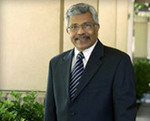
Pastor Mathew holds three graduate degrees in theology from Central and Westminster theological seminaries (USA) and is the founder and former Senior Minister of Grace Valley Christian Center. Originally a scientist from India, he is also a former professor