
Christs Great Commission
Matthew 28:16-20P. G. Mathew | Sunday, April 14, 1996
Copyright © 1996, P. G. Mathew
What is the basis of the continuing missionary activity of the church of Jesus Christ? It is the great commission given by the risen Christ in Matthew 28:16-20. God has given us the gospel of his Son, that Christ died for our sins, Christ was buried and Christ was raised on the third day according to the Scriptures. Through this gospel God caused our knees to bow and our tongues to confess that Jesus Christ is Lord, and we have been saved. But God also wants us to proclaim the gospel to others so that they also may believe and be eternally saved.
The Mission to Evangelize
After he rose from the dead, Jesus commissioned his disciples to “make disciples of all nations, baptizing them in the name of the Father and of the Son and of the Holy Spirit, and teaching them to obey everything I have commanded you.” This is the mission given to the church by the Lord of the church, Jesus Christ, but not all churches engage in carrying it out. For example, liberal churches do not believe in evangelism. Liberals are people who will not believe in the authority of Scripture nor in the physical resurrection of Jesus Christ. To them the world is already saved, even though it may not know it, so they do not think they need to evangelize.
What about true Christians who believe in the resurrection and in the great commission of the risen Christ? Even some of them do not see the need to evangelize. For example, in the late eighteenth century William Carey, a poor English shoemaker, desired to go to India as a missionary, but the church of his time opposed him. They said the great commission was given only to the original apostles and thus was already fulfilled. This was a theology embraced by a number of Reformed people at that time. It was a convenient theology, because the gospel had already reached Europe, and in these people’s minds, the gospel was only for civilized people. They did not care about pagans, and saw no need to evangelize them.
But the Holy Spirit burdened William Carey to go to the pagan country of India to preach the good news of the gospel. I am quite glad that he did not believe in the authority of the time, but rather was obedient to the Spirit of the living God. Carey taught himself many languages–Latin, Greek, Hebrew, Dutch, French, Sanskrit, Bengali, Marathi, Punjabi and Telugu–not through his own genius, but with intelligence given by the Spirit of God. Despite theological opposition from his church, Carey did go to India and became a very successful missionary and great Bible translator. He reminded his Reformed opponents of the promise of Jesus, that Jesus is going to be with the church to the end of the age.
Like Carey, we need to be engaged in Christ’s mission of evangelism. William Carey did not believe the theology of his day, that the great commission had already been fulfilled, and God was able to use him mightily. In his recent book, The Church , Dr. Edmund Clowney also says that the Lord evidently expected the mission of the church to continue. Like Carey, then, Christians in every generation have the responsibility to be taught by the Holy Spirit concerning the meaning of the Holy Scriptures, and carry out the commands of Christ found in the Scriptures, including the great commission.
The Commission Based on Truth
After Jesus had risen from the dead, the liberals of the day–the chief priests and elders–gave the soldiers a large amount of money and told them to spread the lie that the disciples of Jesus had come at night while the soldiers were sleeping and had stolen the body of Jesus. We find this lie still promoted today by the descendants of those old liberals under the inspiration of the father of all lies, the devil.
But the risen Christ is the Lord of all the universe, and his will is that all the families of the earth be blessed through the gospel. We see this in John 12, when some Greeks came to meet with Jesus prior to his death. At that time Jesus said, “I tell you the truth, unless a kernel of wheat falls to the ground and dies, it remains as a single seed. But if it dies, it produces many seeds” (John 12:24). In other words, Jesus was predicting that he would soon be killed and raised from the dead, and that Gentiles, including Greeks, would hear the gospel and be saved.
After Jesus rose from the dead, he appeared to his disciples on a mountain in Galilee, as he had planned before his crucifixion (v. 16). This could be the appearance to five hundred people that Paul describes in 1 Corinthians 15:6. When the disciples saw Jesus, they worshiped him as King and God, and yet we are told that some doubted (v. 17). Some doubted! These disciples of Jesus Christ were not a credulous, hallucinatory bunch who believed everything. They required empirical, infallible proofs of Christ’s resurrection. Jesus gave them such proof. In Acts 1:3 Luke says, “After his suffering, [Jesus] showed himself to these men and gave many convincing proofs that he was alive. He appeared to them over a period of forty days and spoke to them about the kingdom of God.”
Remember Thomas’s reaction to the news of Christ’s resurrection? He said, “Unless I see the nail marks in his hands and put my finger where the nails where, and put my hand into his side, I will not believe” (John 20:25). Jesus gave Thomas infallible proof, and Thomas was convinced. He confessed, “My Lord and my God!” That is worship. So the doubters among the disciples did not remain doubters. Rather, they were all convinced, and because of this, we also are convinced of the truth of their eyewitness report. We know that Christ is risen indeed!
Jesus Claims Authority
When Jesus spoke to his gathered disciples, first he made a stupendous claim. He said, “All authority in heaven and on earth has been given to me.” God the Father gave the Son universal dominion, and he is sovereign Lord of all. Satan once tempted Jesus by promising to give him all the glories of the kingdoms of the world if only Jesus would worship Satan (Luke 4, Matthew 4). But Jesus, the suffering Servant, refused to worship Satan. He would only worship and serve God, and would take the path of suffering and humiliation God ordained for him. Why? Unlike Adam, who obeyed Satan and brought about the fall of the whole human race, Jesus came to destroy Satan and bring salvation and eternal life to all who believe in him. And because of this “God exalted him to the highest place, and gave him the name that is above every name, that at the name of Jesus every knee should bow, in heaven and on earth and under the earth, and every tongue confess that Jesus Christ is Lord, to the glory of God the Father” (Phil. 2:9-11).
Christ was given all authority. The Father raised the Son, and Paul tells us God “seated him at his right hand in the heavenly realms, far above all rule and authority, power and dominion, and every title that can be given, not only in the present age but also in the one to come. And God placed all things under his feet and appointed him to be head over everything for the church, which is his body, the fullness of him who fills everything in every way” (Eph. 1:20-23). Daniel spoke of this in Daniel 7:13-14: “In my vision at night I looked, and there before me was one like a son of man, coming with the clouds of heaven. He approached the Ancient of Days and was led into his presence. He was given authority, glory and sovereign power; all peoples, nations and men of every language worshiped him. His dominion is an everlasting dominion that will not pass away, and his kingdom is one that will never be destroyed.” Jesus Christ is the mediatorial King of the kingdom of God. It is the will and decree of the Father that his Son must reign until he has put all his enemies under his feet, as we read in 1 Corinthians 15:25. His mission is to destroy, terminate and set aside all dominion, authority, and power that is opposed to him. The last enemy he will destroy is death. He will rule with a rod of iron, as we read in Psalm 2. So the resurrection of Christ is a threat to all power, dominion, and authority that opposes the kingdom of the Lord Jesus Christ. All authority of God is mediated through his Son.
The days of Christ’s self-limitation are over and his universal lordship has begun. In the days of his suffering and humiliation, Jesus was called a Samaritan, a blasphemer, a drunkard, and a demon-possessed person. In the days of his humiliation he was poor and had no place to lay his head. He was dependent on others. He was slapped, cursed at, spat on and mocked. His beard was plucked, he was hit with fists and a rod, and finally he was crucified. But those days are over. This same Jesus was raised by the Father and made King of kings and Lord of lords. He will put down and destroy all his enemies, men and angels, and save his elect who will confess him as Lord. Do you believe the great claim for all authority made by this great King? Oh, he did not grasp it for himself, but it was bestowed upon him by his Father as a reward for his obedient suffering. All authority means no power in heaven or on earth can resist Jesus Christ. He is gracious and compassionate toward all who will repent and believe on him, but he is also full of wrath toward all his enemies. We read about this in Revelation 6: the wrath of the Lamb.
The Great Commission
In verse 19, then, there is a great commission proceeding from this One who was given universal lordship. The text says, “Therefore go. . .” What does the “therefore” refer to? It means that the disciples are to go on the basis of the universal lordship of Christ. They need not fear the powers of evil, or evil powers in this world. As ambassadors of the King of kings and the Lord of lords, the universal authority, power, and rule of the risen Christ is behind them, before them, and around them. They can go.
“Therefore go and make disciples of all nations.” Do you remember when Jesus sent his disciples out before? In Matthew 10:5-6 we read, “Do not go among the Gentiles or enter any town of the Samaritans. Go rather to the lost sheep of Israel.” Those were the days of particularism, when they were limited in their going. But those days have come to an end. With the resurrection and exaltation of Christ, universalism has been ushered in, and the gospel must be proclaimed and declared to all nations.
Jesus sent them to “all nations,” meaning Jews and Gentiles. Some people would say he meant only Gentiles, but that is not true, at least the way the apostles understood it. In Luke 24 and Acts 1 we are told that, after receiving the Holy Spirit, the disciples were to be witnesses in Jerusalem, Judea, Samaria and unto the uttermost parts of the earth. All nations must be blessed with the salvation of Jesus Christ, the Son of David, the Son of Abraham, as God promised in Genesis 12:3. These disciples would soon receive the power garment of the Holy Spirit, and clothed in this garment, they must go.
Go and Make Disciples
What were Jesus’ followers to do? Make disciples. What does that mean? Are disciples people who have lost their minds? When we look at the church of today, we may think that is what a disciple is–one who will not think, one who has lost his mind. But no, that is not what the word disciple means. A disciple is one who exercises his mind as he hears the gospel. Disciples are learners. Disciples are those who understand the gospel, that Christ died for their sins, was buried, was raised for our justification by the glory of the Father on the third day according to the Scriptures. They understand that Christ is the King of kings and Lord of lords. Disciples are those who love the gospel with their whole hearts and surrender themselves totally to the lordship of this universal King, Jesus.
Disciples are those who will deny themselves and follow Jesus Christ all the days of their lives in complete obedience. How dare we think that Jesus can be a Savior but not Lord? Disciples are those who will love Jesus Christ more than their parents, their own culture, their own lives and everything else. They are those who willingly take up their cross daily and follow Christ. Disciples are learners and followers of Christ who have separated themselves from the world and are united to this King of the universe by faith. They are those who will not fear being killed by world powers because of their allegiance to Christ. They know that not even a hair of their heads shall truly ever perish, because their King is the resurrection and the life, and has power over death itself.
Preach the Gospel
How were the apostles to make disciples? First, by preaching the gospel. Now, the apostles did not preach a discounted Christianity, one that presented Jesus as Savior but not as Lord. No, they preached that Jesus is universal Lord, and therefore Savior of his elect. For example, on the day of Pentecost, Peter, in the power of the Holy Spirit, spoke of the death, burial, resurrection, and exaltation of Christ. We are told his listeners were cut to the heart. What was happening? The Lord, by the Spirit, was convicting sinners. He was opening their closed, dead, rebellious hearts, just as he also opened the heart of Lydia in Philippi (Acts 16). This is the miracle of regeneration. This is effectual calling.
When people do not believe in regeneration, they will preach a discounted gospel. They will say, “Why don’t you just receive Jesus as Savior? I know it is pretty hard for you to receive him as Lord.” Why do they do this? It is because they deny the miracle of regeneration. I have heard a great evangelist say recently that a person will be born again if he or she repents and believes on Jesus Christ. That sounds very right, but, in fact, it is utterly false. Reformed teaching says that a person cannot repent or believe on the Lord Jesus Christ unless he or she has been effectually called by the miracle of regeneration. Without the supernatural work of the Spirit of God, no one will respond to the gospel, because all people are total rebels. They cannot and will not love God.
As a result of St. Peter’s preaching, people repented of their sins, and let me assure you, they repented enough to hate and forsake their sins. They believed on the Lord Jesus Christ. Repent and believe. To the Philippian jailer St. Paul said, “Believe on the Lord Jesus and you will be saved” (Acts 16:31). We are saved by grace alone through faith alone. Faith is our vital connection with Christ. Faith is trusting in him forever.
Baptizing Them . . .
What else did Jesus command? The great commission says disciples must be baptized. Baptism is the sign of separation from the world and union with the triune God. It is the sign of submission to the rule of Jesus Christ, the Lord of all. It is the sign of entrance into the covenant community of this great King, of entering into a vital and lasting relationship with the triune God, the Father, Son and the Holy Spirit.
Teaching Them to Obey
As I said, a disciple is not one who lost his mind, but one who exercises his mind. He must learn the gospel, and then he is to teach it. Many evangelical Christians are on the end of the spectrum where there is not much mind but a lot of feeling. Mindlessness characterizes much evangelism and Christianity today. On the other end there are churches who are so steeped in the intellectual understanding of doctrine that they enjoy arguing and defending it, but there is no real practice of Christian love among them. We must have balance. There should be doctrine along with godly living.
So Jesus, this great King of kings and Lord of lords, said, “teaching them to obey. . .” That means life. Jesus is not referring to the Greek idea of acquiring theoretical knowledge from a guru, or a master, for a fee. No, the teaching of the Lord and King is for living. We must obey Jesus Christ totally without selective obedience. Jesus, as the Sovereign Lord of the universe, was instructing his disciples, “teaching them to obey all things whatsoever I have commanded you.”
In the book of Acts we read that they devoted themselves to the apostles’ teaching, which is the teaching of the Lord of the apostles. Let me say again, this idea that you can receive Jesus as Savior but not as Lord is an utter lie on the basis of this great commission.
Let me prove this idea to you from other parts of the Scripture. In Acts 5:29 and 32 we find a Greek word, peitharcheo , which means obedience to a superior authority. Verse 29: “Peter and the other apostles replied, ‘We must obey God rather than men!'” The idea there is that they must obey the superior authority, God, rather than men. Verse 32: “We are witnesses of these things, and so is the Holy Spirit whom God has given to those who obey him.” That is lordship, isn’t it? That means our total obedience and surrender to him.
Paul, the great theologian, spoke to this issue. What was the purpose of his apostolic calling? In Romans 1:5 he wrote, “through him and for his name’s sake we received grace and apostleship to call people from among the Gentiles to the obedience that comes from faith.” What did Paul understand about making disciples and teaching? In Romans 6:17 he said, “But thanks be to God that, though you used to be slaves to sin, you wholeheartedly obeyed the form of teaching to which you were entrusted.”
In Romans 15:18 Paul wrote, “I will not venture to speak of anything except what Christ has accomplished through me in leading the Gentiles to obey God.” In Romans 16:19 we read, “Everyone has heard about your obedience, so I am full of joy over you. . .” And in verse 26 Paul wrote of the proclamation of Jesus Christ which was previously hidden”but now revealed and made known through the prophetic writings by the command of the eternal God, so that all nations might believe and obey him.”
The whole of the Bible must be taught. The church that refuses to have a vigorous teaching ministry of the infallible word of God is not fulfilling this great commission. And those who discount Christianity and present a Christ who is less than the sovereign Lord should be ashamed of themselves for misrepresenting the commission. Such preaching is not making of disciples. It is another gospel, and a lot of modern evangelism based on such preaching does not make of disciples as Christ intended.
Our Great Consolation
What else do we find in this great commission? Jesus gives his disciples a great word of consolation. Remember, in Matthew 10, Jesus said he was sending the disciples out like sheep among the wolves? The Lord of the church understands there are problems in the world, and that his disciples will need consolation. And so the consolation is given. He says, Surely–in the Greek it is idou , meaning behold, see, remember, keep in mind–that I, the one who is given universal dominion, power, rule, authority, the one who must reign and put down and destroy all rule, power and dominion–am with you. That is good to know. This is not a Christ who is weeping and pleading with us to come and believe in him. May God help us to have a proper view of the risen Christ!
Jesus said, “I am with you ,” meaning he is with every child of God who is in this world. He is with every one who is shining as a light, as a witness to Jesus Christ, who is sharing the true gospel to a hostile world. I am with you! In Matthew 1:23 we were given a name for Jesus: “They will call him Immanuel. . .” What does that mean? God with us. And in Matthew 18:20 Jesus himself said, “For where two or three come together in my name, there am I with them.” God is with us individually; God is with us when we gather together as a church; and God is with us when we go out among the wolves into the world. God is with us. We are weak but he is strong. We may be foolish but he is wise.
Then Jesus said, “I am with you always.” In the Greek you do not need to use the word eimi , meaning “I am,” but here Jesus adds it. He doesn’t mean “I will be” or “I may be” but he is emphasizing “I am with you”–as Savior, Lord, God, Shepherd, Physician, Friend, and Captain. “I am with you,” Jesus is saying. He is with us when we are alone, when we are in the church, when we are out in the world. He is with us to bless, defend, guide, forgive, strengthen, heal, and provide for us. So Paul says, “Thanks be to God who always leads us in triumphal procession in Christ and through us spreads everywhere the fragrance of the knowledge of him” (2 Cor. 4:14). That is the gospel.
I Will Be With You Always
In John 14:18 Jesus promised his disciples: “I will not leave you as orphans”–meaning as those who are homeless, defenseless, fatherless, and motherless. This is true. He will be with us by his Holy Spirit, and he will be with us always. He will be with us every moment of every day all our days until the end of the age. This means that when we are young he is with us; when we are old he is with us; when we are weak he is with us; when we are strong he is with us; when we are sick he is with us; when we are healthy he is with us; when we are poor he is with us; when we are rich he is with us; when we are attacked he is with us; when we are hated he is with us; when we are beaten he is with us; when we are stoned, as Stephen was, he is with us; when we are martyred he will be with us. He gives grace, doesn’t he? Though we go through the flood and the fire, God will be with us, all the days of our lives. We tend to think he doesn’t know our situations and problems, but he does. When we go through the fire, as he was with Shadrach and Meshach and Abednego in the fire, he will be with us. As he was with the Israelites in the wilderness, he will be with us.
In Hebrews 13:5 God says “Never will I leave you; never will I forsake you.” Then the writer to the Hebrews says “Jesus Christ is the same yesterday and today and forever” (v. 8). To St. Paul this Christ said, “My grace is sufficient for you, for my power is made perfect through weakness” (2 Cor. 12:9). And Paul drew this tremendous conclusion: “When I am weak, then I am strong” (v. 10). In Philippians 4:13 he declared , “I can do everything through who give me the strength.”
Jesus Blesses the Disciples
In Luke 24:50 we read that Jesus “lifted up his hands and blessed them.” Jesus and his disciples had been on the Mount of Olives a few days before he was arrested and crucified. But now he was back as the Lord of all the universe, the King of kings and Lord of lords, the great High Priest. So we are told that here he lifted up his hands and blessed them, In Luke 1 we saw a priest unable to bless. Zechariah was judged for his unbelief and became dumb. He was supposed to give the Aaronic blessing to the people, but he could not do it. But here at the end of Luke’s gospel we see the great High Priest, one after the order of Melchizedek, who offered up himself as acceptable sacrifice to God in our behalf. He lifted up his hands and blessed the disciples. He may have said, “The Lord bless you and keep you; the Lord make his face shine upon you and be gracious unto you; the Lord turn his face toward you and give you peace” (Num. 6:24-26). Why could he bless them? As a result of the propitiatory sacrifice of our Lord Jesus Christ in our behalf, the Lord has turned his face now toward those who believe in him. The High Priest is the reason.
God has given us peace in Christ. He said, “I am with you always”–to bless us, to keep us and to give us peace. And in Luke 24:52 it says the disciples who were timid, fearful, and hiding now returned to Jerusalem with great joy as a result of this blessing. They hid no longer. They went into the temple to praise and worship God. The Lord blessed them and gave them peace. He gave them courage and boldness. Soon afterwards they received the Holy Spirit in order to fulfill the great commission beginning in Jerusalem and going to the ends of the earth. William Carey was right–the Lord expects the commission to continue until he comes again.
What About Us?
The Lord of the universe, who was with the apostles, is with us. When we are alone, he is with us; when we are in the church he is with us; when we are in the world he is with us. The same Christ is with us. Therefore, let us declare the whole gospel without fear and with great confidence. Jesus saves. And what else? Jesus judges. Let us proclaim this gospel in our lives and by our words until he comes again. He is going to come again with great glory to save his elect, and destroy, judge, and pour out his wrath upon every enemy. It is his job. He must reign until he puts down every rebel.
Have you repented and trusted in this King and Savior? If not, he is your enemy, and he is a formidable one. I exhort you, therefore, by the second psalm, to kiss the Son and be saved. I exhort you, kiss this Son, who received universal lordship and dominion, who must reign. Why? Lest he be angry and you be destroyed in your way, it says, for his wrath can flare up in a moment. And the psalm concludes by saying, “Blessed are those who take refuge in him.”
Do not try to make a deal with him. You can negotiate anything else, but you cannot negotiate the gospel. The terms are dictated by this King, and the response requires your mind, heart, and will–total surrender, in other words. Therefore, fall flat on the ground, worship him as God, King, and Savior, and you will be saved. May God effectually call you and open your heart, that you may respond to the great claim of Jesus Christ our Lord. Amen.
Thank you for reading. If you found this content useful or encouraging, let us know by sending an email to gvcc@gracevalley.org.
Join our mailing list for more Biblical teaching from Reverend P.G. Mathew.
About the Speaker
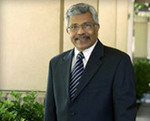
Pastor Mathew holds three graduate degrees in theology from Central and Westminster theological seminaries (USA) and is the founder and former Senior Minister of Grace Valley Christian Center. Originally a scientist from India, he is also a former professor