
“Christian Discipleship”
Matthew 16:13-28; Mark 8:27-38; Luke 9:18-27P. G. Mathew | Sunday, October 01, 1995
Copyright © 1995, P. G. Mathew
Heavenly Father, we pray that you deliver us from self-consciousness, self-centeredness and self-focusing, so that we may focus on you and your holy word. In the final analysis, what matters is your word. So we pray that you help us to listen, not only just with our physical ears, but with our spiritual ears which you have opened. Tell us what it means to be a true disciple of Jesus Christ. Deliver us from the fog of our own ideas. Replace our ideas with your ideas, that we may have sure hope of eternal life. Amen.
Jesus said to his disciples, “Follow me.” What was the context for that command? In this passage from St. Matthew’s gospel we see that at this time Jesus was facing increasing hostility from his enemies, so he took his disciples away to Caesarea Philippi, about twenty-five miles north of the Sea of Galilee. Located at the foot of Mount Hermon, on the main source of the Jordan River, Caesarea Philippi may be the Old Testament town of Baal-Gad, where Baal was worshiped (Joshua 11:17, 12:7, 13:5). There the Greeks later substituted their god Pan for Baal, and the town became known as Panias. Herod the Great built a marble temple there in honor of Augustus Caesar, who gave the town to him. Herod’s son Philip the tetrarch further adorned the town, renaming it Caesarea Philippi, to distinguish it from Caesarea of the Mediterranean coast. Today it is known as Banias. So with the hostility from his enemies increasing, and his time on earth drawing to an end, Jesus took his disciples to this town to disclose to them the work he was about to do. So the first thing we want to examine is the one who gave this command: “Follow me.”
The Commander
“Who do you say that I am?” Here Jesus asked the most important question of all time, a question that everyone in the world must hear and answer. “Who do you say that I am?” Many, especially his enemies, called him different names. His enemies used pejorative names: Samaritan, Beelzebub, glutton, winebibber or sinner. Others said that Jesus was John the Baptist, Elijah, Jeremiah or one of the prophets raised to life again. But no one knew who Jesus really was except his disciples.
Prior to this, Jesus himself had said that he was greater than Jonah, greater than Solomon and greater than the temple. But now, to the question, “Who do you say that I am?” Peter, representing the disciples, confessed that Jesus was the Christ, the Son of the living God. Jesus is the eternal Son of God who is incarnate as the Messiah, God/man.
Now, no one can know who Jesus is just by doing research. There are many philosophers and theologians who study very hard and read the New Testament, but fail to confess that Jesus is the Christ, the Son of the living God. The person of Jesus Christ is hidden from all, and no one can know who he is unless the Father in heaven reveals this truth to those who are his. In Matthew 11 it says that the Father hides this from the wise and prudent and reveals this great truth to the infants, meaning the elect. So God the Father revealed to the disciples who Jesus was, and therefore, Peter correctly confessed that Jesus is the Christ, the Son of the living God.
Despite his confession, Peter was completely ignorant of what the Messiah was to do. He knew Jesus was the eternal Son of God, the promised Messiah, but his view of the work of Jesus Christ as the Messiah was completely false. He ascribed to the popular view of a Messiah who would come in great power to conquer all the enemies of Israel, as David did long ago, and to usher in a golden age of sustained peace, prosperity, security and independence for Israel. The Messiah was to end all the suffering and shame of his people. PGM But here Jesus revealed for the first time what he was going to do. He said, “I must go to Jerusalem and suffer many things . . . and be killed and on the third day be raised.” Why this must ? It was the will of his heavenly Father. And this revelation of a suffering Messiah shattered all the cherished hopes of Peter.
The Rebuke of Peter
How did Peter respond to Jesus’ revelation? In great arrogance he took Jesus aside and rebuked him, saying, “May God have mercy on you, Lord! May this never, ever happen to you!” What arrogance! With this statement Peter was praying against his own eternal salvation and praying for his own eternal damnation. He was praying that God’s eternal purpose of saving his people through the sacrificial death of his own Son would never happen. He was speaking for the devil who tempted Jesus in the same way in the wilderness to seek a crossless life. At that time Jesus told the devil, “Get away from me!”
Peter’s problem is our problem also. We all want a Messiah who is a troubleshooter who solves all our troubles and takes away all our sufferings, one who guarantees us success and gives us material blessings, powerful positions, and powerful friends, one who enhances our pleasure in this life and grants all our requests, one who heals all our diseases, guarantees our happiness, and gives us long life in this world so that we can enjoy a good life.
In other words, Peter was looking for a Messiah who would guarantee him a good life in this temporal world, and like Peter, we are also bounded by the horizon of this temporal world, unless the Holy Spirit opens our eyes, which are blinded by the god of this world (2 Corinthians 4:4). Unless the Spirit of God opens our eyes, we do not see the world to come. We do not consider the eternally-damning effects of sin. We do not consider heaven or hell. We do not consider our own death or the judgment to come. The perspective of the world to come is given to us by revelation, and if our eyes are not opened, we will use Jesus Christ and Christianity as an insurance policy for a good life, a crossless life, here and now. Like Peter, then, we would not want Jesus to go to Jerusalem and die, but rather, we would join with Peter, saying, “May God have mercy on you, Lord! May this never, ever happen to you.” Why? Our understanding is blinded and we do not like suffering.
The Rebuke of Jesus
Look at the rebuke of Jesus Christ. He said, “Get thee behind me, Satan,” and I would tend to interpret that: “Get thee behind me, adversary! Peter, you have become an adversary, a Satan. You cannot tell me what to do.” Isn’t that our problem? We want to tell God what to do, but God says, “You don’t tell me what to do. You must become a disciple and get behind me.” I am glad Jesus didn’t say, “Go away!” That’s what he said to Satan, but not to Peter.
Then Jesus explained, “Your problem, Peter, is that you do not think the things of God.” Isn’t that our problem also? Our minds are bounded by the horizon of this world. We are interested in a trouble-free life, a good life. We are self-focused and self-centered, interested in feeling good about ourselves. Our minds are set on the things of this world. But our thinking is defective, so Jesus said, “Peter, that’s your problem. You have no conception of the kingdom of God and the world to come. You have no understanding of the eternal purpose of God or the will of God. I understand the will of God, but you are interested in self-preservation.”
Isn’t that true of us? Most of our prayers hover around this atmosphere. We pray, “Give me, give me, give me. Give me a good life. Troubleshoot my problems.” But Jesus would not be deterred by Satan or enemies or even by Peter from doing the will of God. God’s eternal purpose of the salvation of his elect through the death of his Son would take place. Jesus loved the Father and the Father’s will. Jesus delighted in his Father’s will that sent his only Son to the cross for his people. Psalm 40 says, “Here I am, I have come–it is written about me in the scroll. I desire to do your will, O my God; your law is within my heart.” In other words, Jesus loved God’s will, he thought about it, and he was doing it! That was the purpose of incarnation! Jesus came in the fullness to time to do the will of his Father, and he would not listen to Peter’s selfish proposal. In God’s order, suffering is now and glory later. May God help us to break out of our own thinking!
So Jesus said, “Get thee behind me, adversary! You do not tell me what to do. My Father tells me what to do. I follow my Father as his disciple. You, Peter, need to get behind me and I will tell you what to do. Even as I, the Christ, the Son of the living God, am the disciple of my Father, you need to be my disciple and follow me once and for all. Think of your soul and its eternal salvation! Break out of the boundaries of this world! There is no forgiveness of sin without my death on the cross for you. If I do not go to Jerusalem and die, you and all the elect of God will be damned forever. But the eternal purpose of God is sure and certain, so I must go and die. Get rid of this idea of a crossless discipleship from your mind, because I as the Messiah must go to the cross. You as a disciple must also go to your cross for my sake and the sake of the gospel. I promise you suffering now but glory later. I promise you troubles, pain, shame, confiscation of your property and martyrdom now, but glory later.” So said this commander.
The Command
What was Jesus’ command? This command, this definition of discipleship, appears at least six times in the gospels: twice in Matthew, twice in Luke, and one time each in Mark and John. The call for discipleship is found everywhere, and thus, we cannot forget about it.
If Anyone Would Come after Me . . .
First, Jesus said, “If anyone wills to follow me. . .” Discipleship is a voluntary decision on our part, not something forced on us. And we know that no one will follow Jesus unless he or she is enabled to do so by God himself, but following Jesus is voluntary. Every Christian who is truly born of God will follow him, and it is the result of a decision. No one just falls into Christianity; rather, this willing is the result of much thinking. The cost of discipleship is clearly revealed by Christ, who said that one must sit down and calculate the cost before following him.
Every true Christian is a disciple of Jesus. Discipleship is not a higher calling. Some people think that at first you can be just an ordinary Christian, but later on you become a disciple. That is not true! Every Christian is a disciple who follows Jesus in his footsteps, doing so after thinking and willing to do so. And Christ makes this totalitarian demand: You must love him absolutely. You must love him more than father, mother, wife, children, brothers, sisters, and even your own life, and you must give up everything you have. In other words, you must hate everything else.
This is nothing new. God tested Abraham’s love for God by telling him to sacrifice his only son, Isaac. By his obedience Abraham demonstrated that he loved God more than his own son, and it shows us that all must be sacrificed for Jesus Christ. Jesus promises and guarantees eternal life in the world to come, but he demands the sacrifice of everything in this world. In John 12:25 Jesus said, “The man who loves his life,” meaning his temporal life “will lose it,” meaning eternal damnation will come to him, “while the man who hates his life in this world will keep it for eternal life.”
He Must Deny Himself. . .
Secondly, Jesus said, “Deny yourself.” This denial is also a voluntary act of love, and every Christian will deny himself. Deny means to once and for all refuse the demands of my own desires. Deny means I say “No” to my own desires.
How does this compare with what we did in our pagan lives? In Ephesians 2:3 Paul says “all of us also lived among them [as unbelievers] at one time, gratifying the cravings of our sinful nature and following its desires and thoughts.” An unbeliever never denies himself. He is a slave to his sinful desires and lives to fulfill those desires. In Ephesians 4 Paul describes unbelievers: “having lost all sensitivity, they have given themselves over to sensuality so as to indulge in every kind of impurity with a continual lust for more.” So the nature of an unbeliever is to deny nothing.
But a disciple has died to sin! We are told, ” I have been crucified with Christ and I no longer live, but Christ lives in me. The life I live in the body, I live by faith in the Son of God who loved me and gave himself for me.” (Galatians 2:20) Why do we deny ourselves? We love Christ who loved us and gave himself for us, so we consider ourselves, as Paul says, “dead to sin but alive to God in Christ Jesus.” (Romans 6:11) And he says to Titus, “For the grace of God” – that’s Jesus Christ – “that brings salvation has appeared to all men. It teaches us . . .” (Titus 2:11,12) If you are a Christian, Jesus Christ, the commander, teaches us “to say ‘No’ to ungodliness and worldly passions, and to live self-controlled, upright and godly lives in this world.” We have to say “No” to ourselves and our desires and demands, and say “Yes” to Jesus Christ and his will, desires and demands. It is an ongoing thing.
Take up His Cross . . .
Not only that, we are also told that we have to take up our cross. For us, this is also a voluntary act. A criminal had no choice. He was forced to take up the crossbeam upon which he would be crucified. But because a disciple loves Jesus who died for him, he freely and voluntarily takes up the cross to suffer for Christ and for the gospel. A true disciple will not seek a life of ease! He understands that life in this world is not free from suffering, no matter which evangelist or preacher says, “Believe in Jesus Christ so you will be insured from all troubles.” The latter is the dominant evangelical message of today, but it is counter to what Jesus Christ preached.
A true disciple knows that as the world treated Christ, it will treat those who are his. Peter initially refused to take up the cross and follow Jesus. He denied Christ three times. Like us, Peter hated suffering and death, but Jesus prayed for him and his faith did not fail. After Peter was restored, Jesus prophesied that Peter would confess Christ and be martyred. So in Acts 5 we see Peter being flogged by the Sanhedrin for his faith in Jesus, but rejoicing at his suffering, saying he was glad to be counted worthy of suffering disgrace for Christ’s name. And in his first epistle Peter wrote, “But if you suffer for doing good and you endure it, this is commendable before God. To this you were called, because Christ suffered for you, leaving you an example that you should follow in his footsteps.” (1 Peter 2:20-21)
Suffering is our lot in this world. Peter confessed Christ and lost his life by crucifixion at the hand of Nero in A.D. 64, but he gained eternal life. He died to live! So also did Stephen, James and Paul, and hundreds and thousands of others throughout the history of the church to this very day. Go to other parts of the world and see how Christians are persecuted and killed, or having their properties confiscated and being forced to flee their countries as refugees. We don’t see anything like that in this country and as a result, many people in the church here are not true Christians. Here we have no troubles or pain or shame. We just make a decision and come to church.
But look at this command again: “You must take up your cross daily.” We must take this cross daily until the day of our death. Daily we must say “No” to ourselves and “Yes” to Christ. Daily we must lose our life by confessing Jesus Christ.
And Follow Me . . .
Then Jesus says, “You have to follow me.” This is speaking about a continuous following of Jesus. In the Greek it is a present active imperative: Keep on following me! Like Elisha left everything to follow Elijah, a true disciple of Jesus Christ says goodbye to everything to follow the God of Elijah wherever he goes. We do not lead him. We never get ahead of him. He leads us. As disciples, we have no other plan, no other desire, no other idea and no other agenda. We think the thoughts of Christ, desire the desires of Christ, will the will of Christ and go where he goes. In one sense we already died with Christ, are buried with Christ, are raised with Christ, are ascended with Christ and are seated with Christ, but in another sense we are following Christ in his footsteps here and now.
This is what we mean by being led by the Spirit of God. We are born of the Spirit, indwelt by the Spirit and daily being led by the Spirit. The Holy Spirit leads us in the footsteps of Jesus Christ, so a true disciple never complains about his leading. Why? He rejoices to follow Jesus Christ, to be led by the Spirit. Jesus Christ leads us away from eternal damnation! Yes, he leads us through the waters, through the valley of the shadow of death, through the floods and through the fires, but he leads us to everlasting life.
Whoever Wants to Save His Life Will Lose It . . .
He who is not a true disciple lives for this world, yet he does not know what is going to happen to this world. His understanding is bounded by the horizon of this world. But what does the Bible say? In Psalm 102:25-26 we read, “In the beginning you laid the foundations of the earth, and the heavens are the work of your hands. They will perish, but you remain; they will all wear out like a garment. Like clothing, you will change them, and they will be discarded.” In Isaiah 34:4 we read, “All the stars of the heavens will be dissolved and the sky rolled up like a scroll; all the starry host will fall like withered leaves from the vine, like shriveled figs from the fig tree.” In 1 Corinthians 7:31 Paul says, “. . .those who use the things of the world, as if not engrossed in them. For this world in its present form is passing away.” In 2 Corinthians 4:18 we read, “So we fix our eyes not on what is seen” – that was Peter’s problem – “but on what is unseen.” And then Paul gives the reason for it: “For what is seen is temporary, but what is unseen is eternal.” In 2 Peter 3:10 Peter himself says, “But the day of the Lord will come like a thief. The heavens will disappear with a roar; the elements will be destroyed by fire, and the earth and everything in it will be laid bare.” In 1 John 1:15-17 we read, “Do not love the world or anything in the world. . . The world and its desires pass away, but the man who does the will of God lives forever.” And in Revelation 21:1 John says, “Then I saw a new heaven and a new earth, for the first heaven and the earth had passed away, and there was no longer any sea.” Think about this!
But Whoever Loses His Life for Me Will Find It. . .
Why did Jesus Christ say it is foolish for a man to live for this world? Using the language of business he asked, “What good will it be for a man if he gains the whole world, yet forfeits his soul?” Think about it! What if you could gain all the world’s position and power and glory and possessions, from not only the planet earth, but from the whole cosmos? “What good will it be for a man if he gains the whole world, yet forfeits his soul?” meaning, if he goes to hell? And then Jesus asked, “Or what can a man give in exchange for his soul?”( Luke 17:26) You cannot give anything for the redemption of your soul! (Psalm 49)
You are a fool if you live for this world! You are a fool if you live for its possessions and positions and power and pleasure and peace! Jesus Christ reasons with us: Think! I pity you if you want to preserve your life in this world. I pity you if you cannot see the world to come. There is a new world coming in which dwells the righteous and righteousness. The Coming
There is a new world order coming. The United Nations cannot usher it in, nor can any president usher it in. But there will be new world order coming when the Messiah returns to this earth. If you suffer with him, you shall reign with him, we are told. All those who lose their present life will find it, Jesus says, when Christ comes in the glory of his Father. He is coming with his angels to reward people according to their deeds. He is not interested in phoniness. His question will be, “What have you done?” He is going to sift our deeds.
You see this sifting in Revelation 20. So Jesus said, “If you are ashamed of me here and now, I will be ashamed of you when I come in the glory of my Father with the angels as the Judge and Savior of the world.” He will be ashamed of some, but he will be delighted in those who lost their lives for Christ and his gospel. There is going to be a new world order where we will be honored and glorified by him, who is King of kings and Lord of lords.
Some Welcomed His Coming
In Hebrews 11 you discover people who looked forward to this great, new, grand world order that is coming. Hebrews 11:10 says of Abraham, “For he was looking forward to the city with foundations whose architect and builder is God.” And verse 16 says, “Instead, they [Abraham and those before him] were longing for a better country, a heavenly one. Therefore, God is not ashamed to be called their God, for he has prepared a city for them.” There is a new world order coming.
Moses understood this, as we read in Hebrews 11:24-27: “By faith Moses, when he had grown up, refused to be known as the son of Pharaoh’s daughter. He chose to be mistreated along with the people of God, rather than to enjoy the pleasures of sin for a short time. He regarded disgrace now for the sake of Christ as of greater value than the treasures of Egypt, because he was looking ahead to his reward. By faith he left Egypt, not fearing the king’s anger. He persevered because he saw him who is invisible.” That’s what denial is all about. Think about it!
Some Hate His Coming
Oh, but look at Esau who so easily sold his birthright. He despised it and sold it, saying, “What does this mean to me? Nothing! I am a person who likes a good life. I want to gratify my desires here and now. Take it! Give me the soup.” Look at Mrs. Lot. She was almost brought into the kingdom of God, but she turned around and said, “No! I like this world and its pleasures and its possessions and its power and its might.” And what did Mrs. Job say? “Curse God and die!” Judas, like Peter, also looked for a political Messiah who would enhance his position and power and possessions in the world. When he found out that Jesus was not going to do it he said, “All right. I am going to sell you for thirty pieces of silver.” And look at Demas in 2 Timothy 4. “Demas deserted me,” said Paul, “because he loved this world.”
Is this our problem? Do we want a troubleshooter, an insurance policy, a Messiah who will massage us and never make us unhappy, who always will do our will, and who will always follow us? Are we looking for that, and getting unhappy when things do not work out our way? Do we want this commander?
What about his command? Do you hate suffering? Do you rebuke Jesus and say, “Don’t go to the cross, Jesus!”? Do you use Jesus and Christianity as a means for a trouble-free life? Is your mind bound by this world and its categories only?
Let me ask you: Are you seeking honor, power, possessions, pleasure, peace and a good life in this world alone? Do you hate to think about Christ’s second coming? If so, then I say to you: Repent and believe on the Lord Jesus Christ. He alone will give you a whole new world. Amen.
Thank you for reading. If you found this content useful or encouraging, let us know by sending an email to gvcc@gracevalley.org.
Join our mailing list for more Biblical teaching from Reverend P.G. Mathew.
About the Speaker
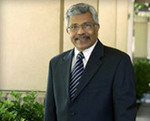
Pastor Mathew holds three graduate degrees in theology from Central and Westminster theological seminaries (USA) and is the founder and former Senior Minister of Grace Valley Christian Center. Originally a scientist from India, he is also a former professor